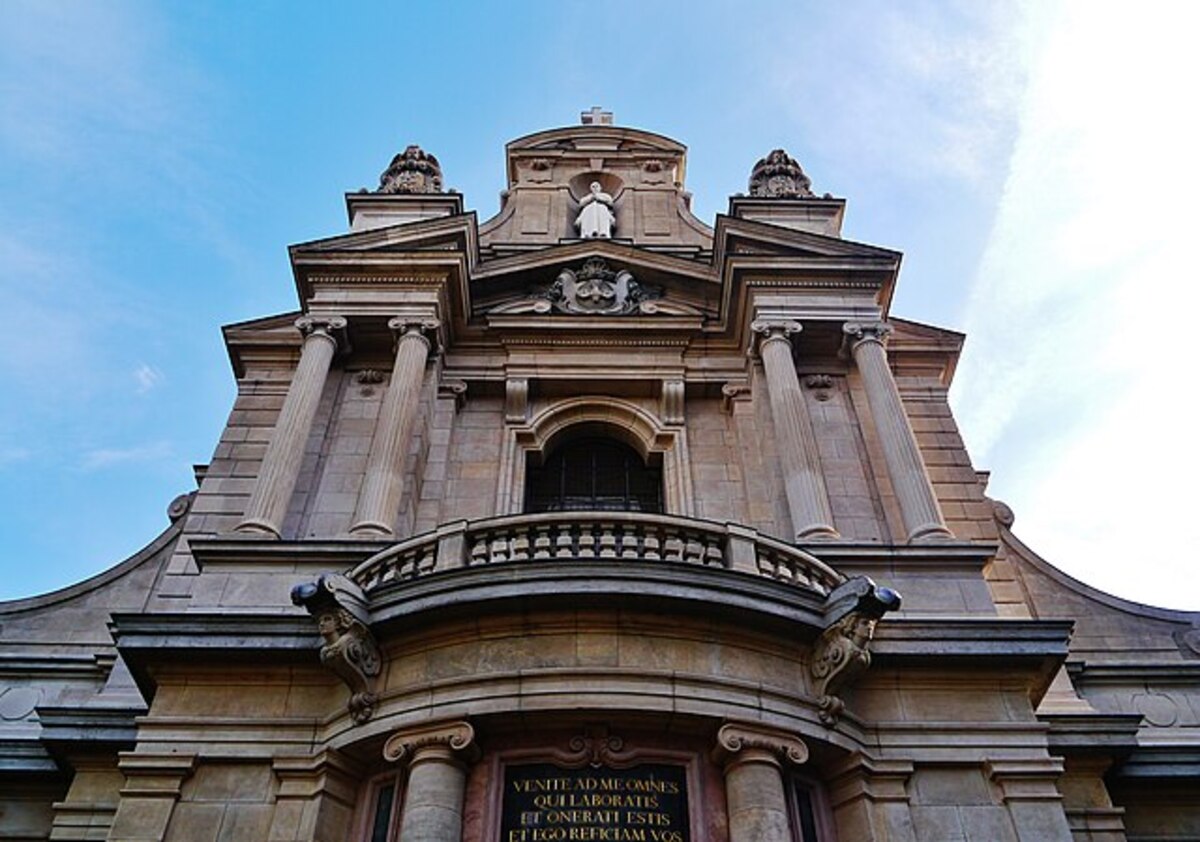
The Church of Saint-Bruno des Chartreux, a listed historical monument located on the historic slopes of Croix-Rousse, is a true icon of Lyon’s Baroque art. This religious building is even considered one of the most beautiful Baroque temples in France. Its construction, which spanned the 16th to 18th centuries, saw a succession of masters such as Jean Magnan and Soufflot, giving it a unique architectural richness.
And this year, the contrast is striking: the splendor of the Baroque style is combined with the soft glow of candles. The perfect acoustics of Saint-Bruno Church are illuminated for candlelight concerts, transforming this sacred place into a scene of rare magic.
 Wikimedia Commons, Zairon
A place steeped in history
The history of Saint-Bruno begins with the austere Carthusian order. Founded in 1584, the Chartreuse du Lys Saint-Esprit was initially intended to reflect the simplicity of monastic life. However, the work, which took over a century to complete, gave rise to a spectacular building, a symbol of the power of the Church at the time. Closed and sold as national property during the Revolution, the church survived destruction and was reborn as a parish church in the 19th century, marking the beginning of its revival.
What can you do at Saint-Bruno Church?
Although it has become a parish church, the building continues to play a major liturgical and cultural role in Lyon. It is a veritable museum housing artistic treasures of absolute rarity, including major paintings from the 17th and 18th centuries and one of the best two-keyboard organs in the city. Regular guided tours are organized, offering art lovers the privilege of deciphering the secrets of its nave and small cloister.
The building’s legendary acoustics open its doors to exceptional events. The church lends itself to the most intimate cultural experiences: it hosts the famous Candlelight concerts, where the soft glow of candles enhances the baroque building and its frescoes, creating a backdrop for classical or contemporary melodies.
What makes this church unique?
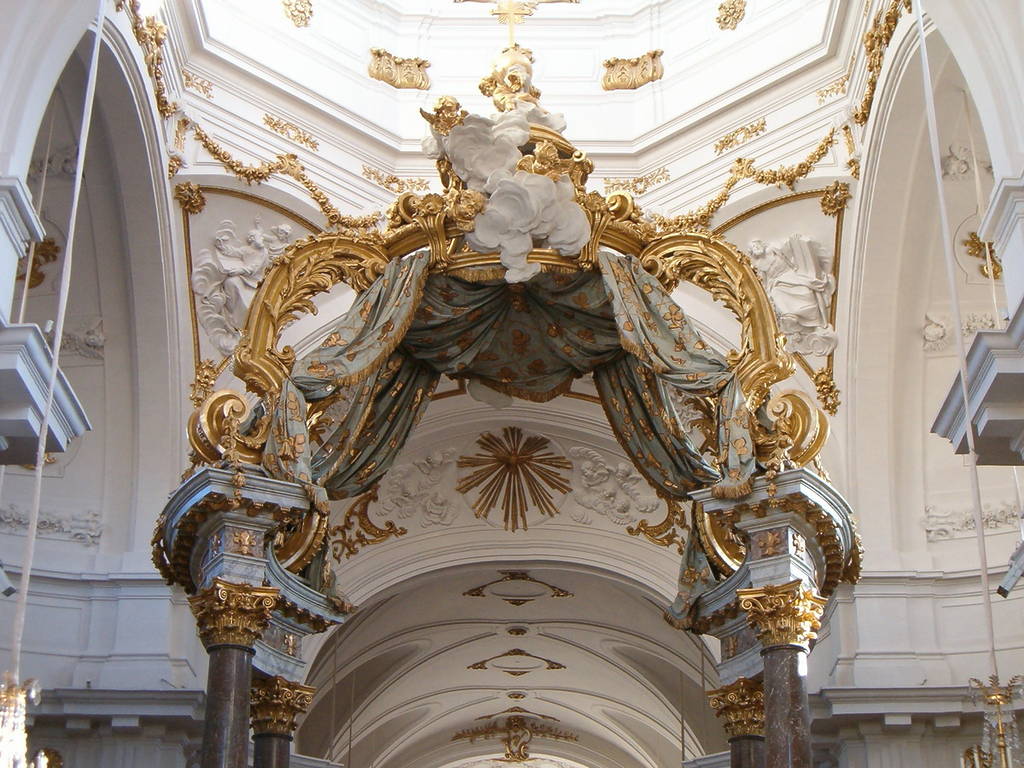
What makes Saint Bruno’s Church truly special is its incredible attention to detail. The star of the show is undoubtedly its Baldachin, a giant structure that seems to float above the altar.
This 18th-century masterpiece, designed by Italian architect Giovanni Servandoni with the help of Lyon masters such as Jacques-Germain Soufflot, is renowned for being unique in the world. Indeed, it has an astonishing secret: while its columns are made of solid marble, its large curtains are made of real linen fabric. At the time, craftsmen dipped the fabric in plaster to “freeze” the folds and give the impression of natural movement.
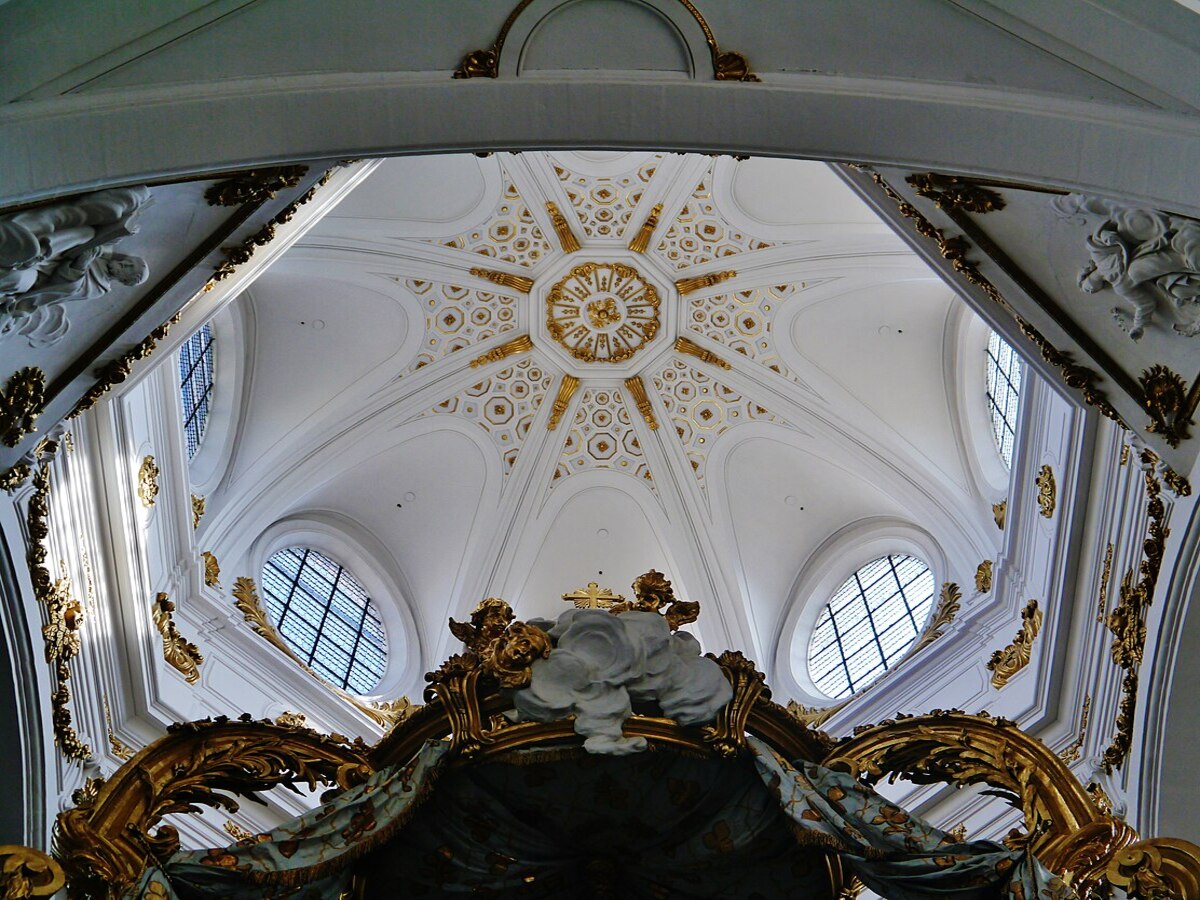
The trick continues at the top: to prevent the whole structure from being too heavy, the clouds and little angels decorating the top are made of papier-mâché. This combination of lightweight materials gives the building an airy, magical feel, crowned by a huge dome that dominates the entireCroix-Rousse hill( reaching a height of 50 meters).
What are the symbols of Saint Bruno?
The church is imbued with the spirituality of the Carthusian Fathers, an order that advocates austerity and silence, in stark contrast to the splendor of the decor. Numerous symbols adorn the interior, particularly on the exceptional lectern that decorates the former monks’ choir. It represents the Trinity and its theological mysteries, including the eagle (symbol of the Word of God), the grape (symbol of Christ), and the dove (the Holy Spirit).
In addition, the baldachin is topped with scrolls and palms bearing a large crown, affirming the kingship of Christ. These details, often invisible to the untrained eye, tell the profound history of the order.
The secret of its name: Why is Croix-Rousse called that?
The church is closely linked to the history of the neighborhood. Unlike Fourvière (“the hill that prays”), Croix-Rousse was once nicknamed “the hill that works” because of the activity of the Canuts (silk workers).
But the name Croix-Rousse comes from a much simpler detail: in 1560, a cross made of Couzon ochre stone, characterized by its reddish color, was installed on the plateau of the hill. Although it was often destroyed and rebuilt, it was this small cross that gave the suburb its name, a secret of Lyon’s history that the neighboring church carries with it.
FAQs
Can we visit the Church of Saint-Bruno des Chartreux?
Yes, you can visit the Church of Saint-Bruno des Chartreux. To admire the interior, the church is open Monday through Saturday from 3:00 p.m. to 5:00 p.m. (except on public holidays). Once there, you can choose between two options to support its maintenance:
- Independent exploration for a contribution of €2 per person
- A complete experience with a guided tour for €10 per person, allowing you to discover the history behind these gems.
Who were the Carthusians?
The Carthusians were monks who founded and inhabited this place for centuries. Imagine men living almost like hermits, but within a community.
In Lyon, their estate was immense and covered a large part of the Croix-Rousse district. It is this striking contrast between their very sober daily life and the incredible wealth of their church that makes Saint-Bruno so fascinating.
Why is Saint Bruno famous?
Saint Bruno founded the Carthusian order in the 11th century. He is famous because he turned his back on a prestigious and well-established career in the Church, judging this religious life to be insufficient. He left to seek total peace in the deserted mountains near Grenoble, in the Grande Chartreuse massif.
For many, his name is also inseparable from a legendary product: Chartreuse. Although Bruno did not invent the famous green liqueur (it appeared much later thanks to the expertise of the monks of his order), his image remains linked to this ancestral knowledge of medicinal plants.
Where is this building located and how do you get there?
The Church of Saint-Bruno des Chartreux is located at 56 Rue Pierre Dupont in Lyon’s 1st arrondissement.
This gem is easily accessible by public transportation. You are just a few minutes from the Croix-Rousse metro station (line C) or the Clos Jouve bus stop, served by buses 13, 18, 2, and 45. Please note that access to the church is generally free, but guided tours of its hidden treasures (cloister, chapter house) are regularly organized.
 Wikimedia Commons, Zairon
Other nearby placesThe Church of Saint-Bruno des Chartreux
Just a few minutes fromthe Church of Saint-Bruno, you will find other venues offering rare cultural experiences.
The Temple du Change and the Chapelle de la Trinité, two historic buildings in the city center, also host Candlelight concerts. Like Saint-Bruno, these sublime venues are transformed into magical settings where the soft glow of candlelight highlights Lyon’s architecture, creating timeless musical moments.