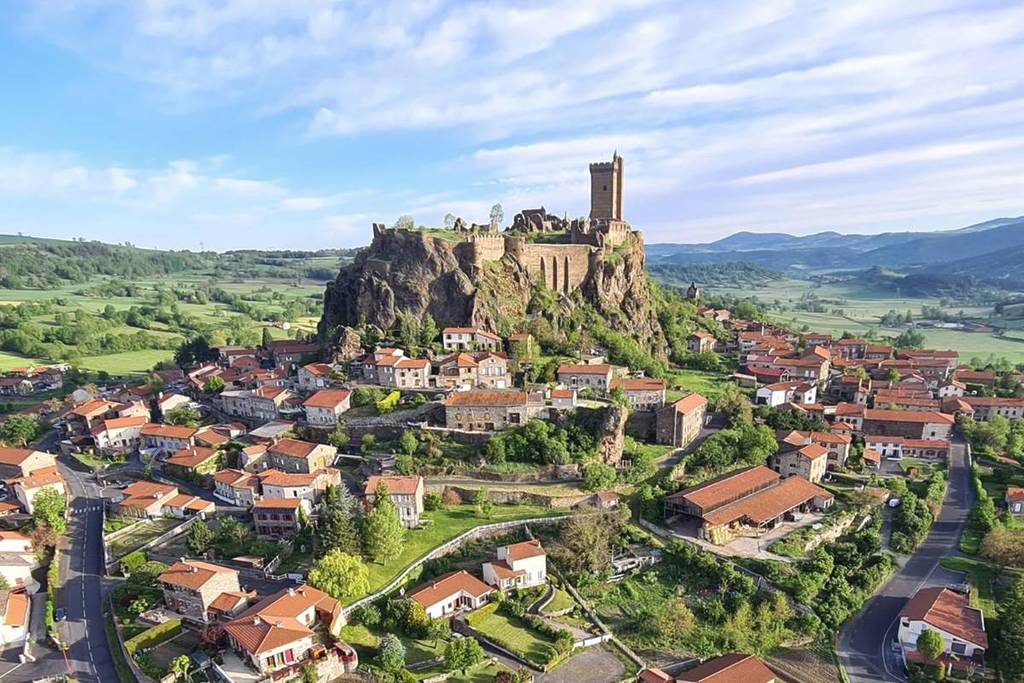
But where does all the imagination of the greatest authors and filmmakers in epic sagas such as The Lord of the Rings or Game of Thronescome from ? Probably from our own history and heritage. The proof is in this latest gem near Lyon, which is certainly not lacking in character. One of the most beautiful villages in France, with an iconic fortress as the icing on the cake: let’s head to Polignac!
Polignac and its hilltop fortress
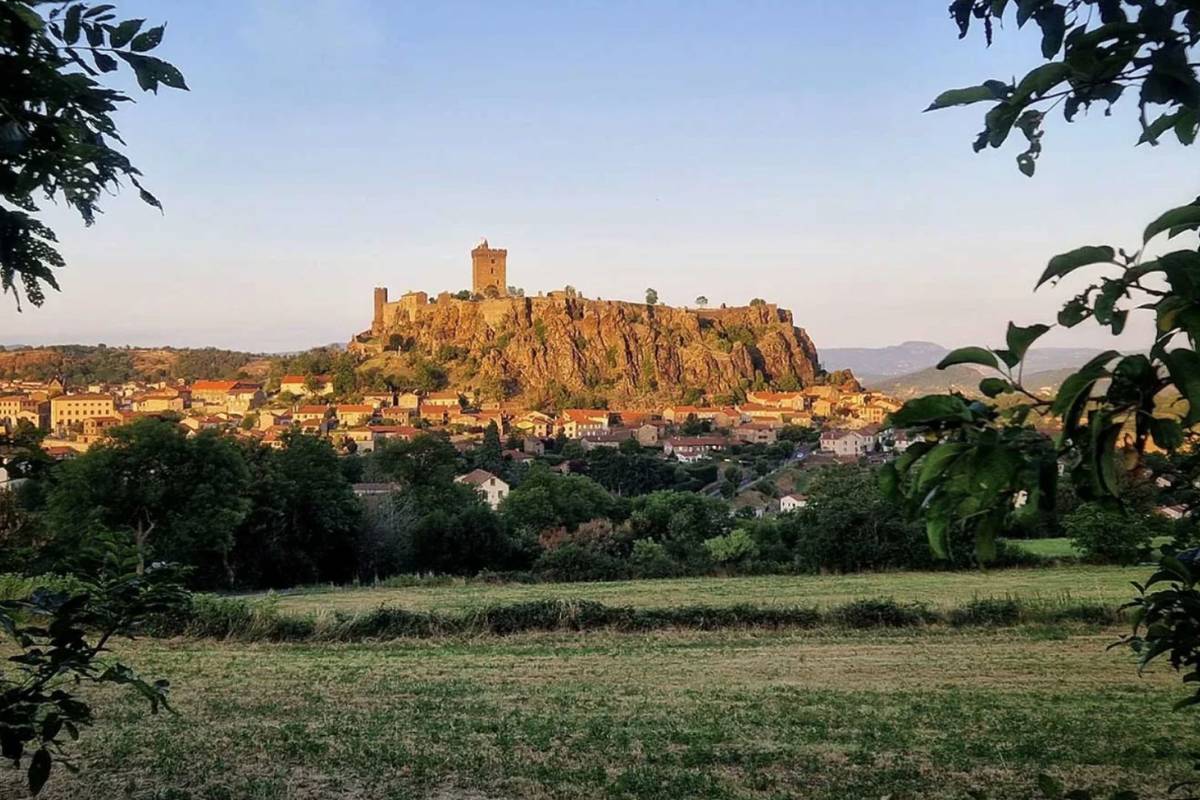 ©Haute Loire
After Semur-en-Auxois, Pérouges, and Pont-en-Royans, here’s a new getaway near Lyon straight out of an Alexandre Dumas novel. Polignac is sure to impress you. Literally. Because what catches our attention is, of course, the imposing fortress standing proudly on this promontory, which we want to explore at all costs.
Built by the Polignac family to protect Le Puy-en-Velay from the 14th century onwards, the fortress stands over 100 meters high. In total, there are 800 meters of ramparts, six fortified gates, and a 32-meter tower… enough to intimidate anyone who might want to attack it. This is why many peasants came to settle here in search of safety, building the village below this stronghold. After being abandoned after the French Revolution in the early 19th century, the fortress was quickly classified as a Historic Monument in 1840.
François I was blown away by the imposing building and the view it offers of the surrounding area. George Sand, for her part, visited the site and drew inspiration from it for one of her first masterpieces, Le Marquis de Villemer. As you can see, whether you are a great Renaissance king, a great romantic writer, or simply curious like you and me, Polignac is fascinating in every way.
The most volcanic historic village in France
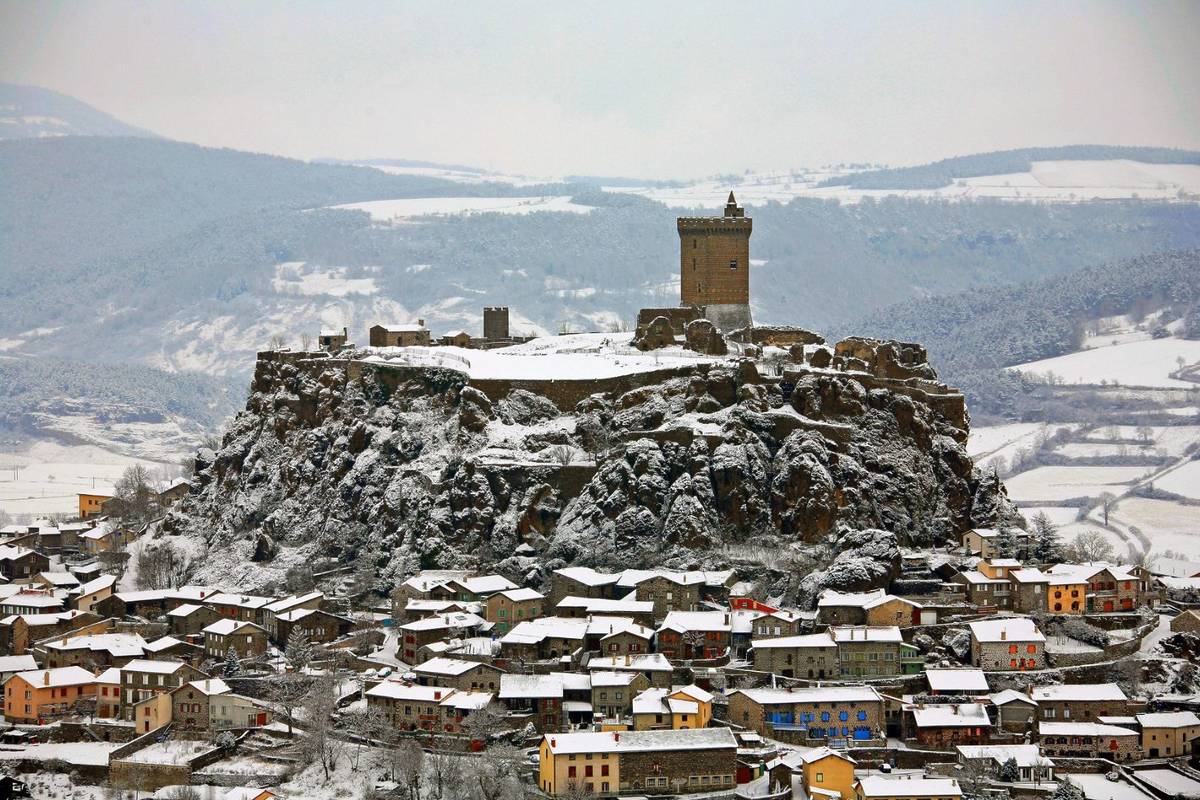 ©Polignac Town Hall
Both in name and architecture, Polignac is History with a capital H. But let’s not forget that it is located in the heart of the Massif Central. Here, despite one of the most beautiful fortresses in France, it is the volcano that remains king! Imagine a huge lake 2.5 million years ago covering the entire area for miles around. At that time, the volcanoes were in peak condition, creating huge mounds of lava rock such as the one in Polignac.