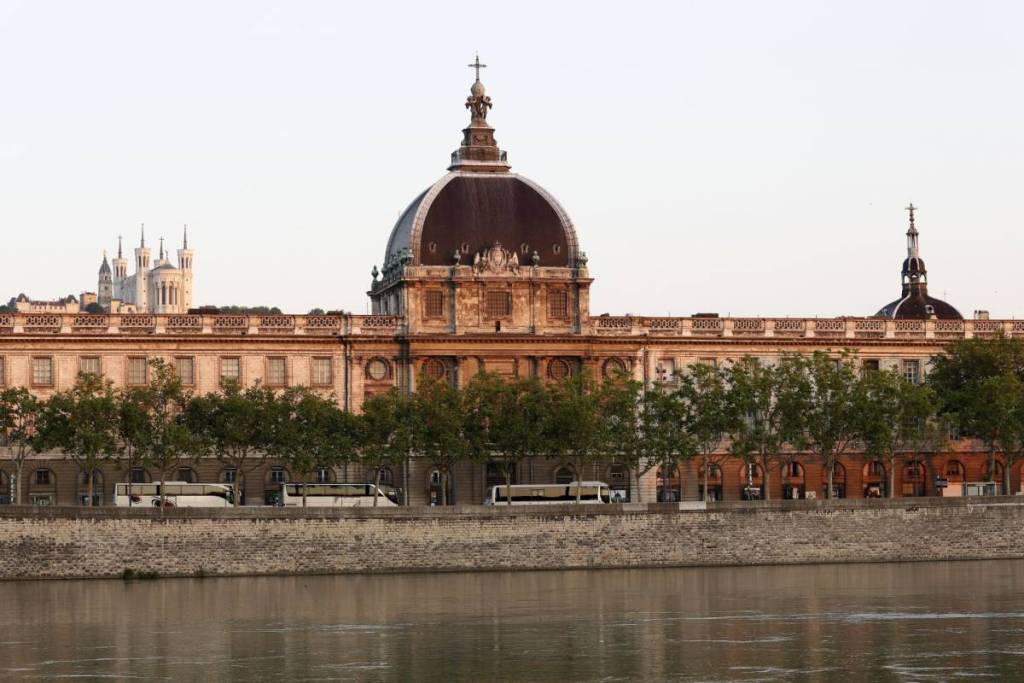

If you invite friends from outside Lyon for a weekend in the capital of Gaul, the reaction is often the same: “Oh my, it’s huge!” And indeed, it is. It’s one of the giants of Lyon’s skyline, just like Place Bellecour right next to it or the Basilica of Fourvière just above it. Let’s take a look back at this iconic building, whose history is just as fascinating as its size is impressive.
The Hôtel-Dieu: Nearly 1,000 Years Serving the People of Lyon
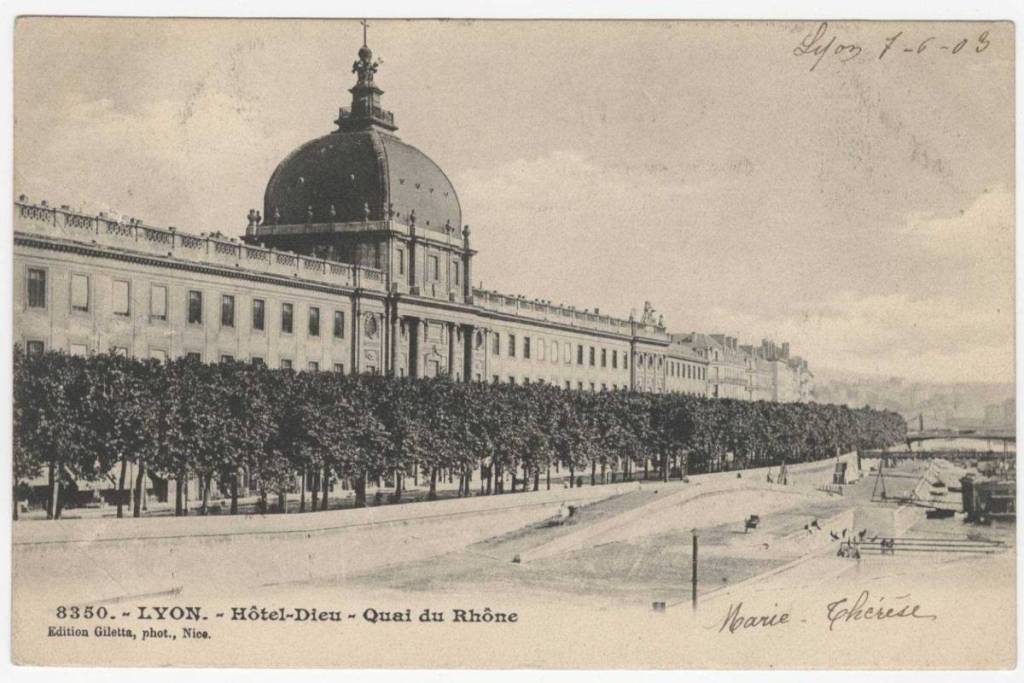
We tend to forget that the Hôtel-Dieu was the city’s first hospital. The original building was constructed in 1185, ten years after work began on Saint-Jean Cathedral. The structure evolved over time and remained in operation for eight centuries. We learn that in the 16th century, Rabelais, the great Renaissance writer, was appointed a physician there. Two hundred years later, it was Jacques-Germain Soufflot’s turn to contribute to the hospital’s beautification and renown. The architect, also known for designing the Opera House, would transform the building. In addition to expanding the premises and carrying out a major renovation—particularly of the facades—it was the grand dome that would become the symbol of his ambitious project. A dome that, beyond its aesthetic appeal, served as a giant exhaust hood. At the time, it was believed that diseases were transmitted primarily through the air. The dome served as a natural ventilation system to filter the ambient air. What a brilliant idea!
At the very end of the 19th century, a man named Étienne Destot, a trained anatomist, moved into the Hôtel-Dieu to conduct groundbreaking research. He performed the very first X-rays in 1896 and established France’s very first radiology department. From the invention of veterinary medicine to that of X-rays, Lyon has been a city firmly focused on healthcare. The Hôtel-Dieu would continue its noble mission for many years to come: caring for the people of Lyon.
The Hôtel-Dieu: Welcome to paradise… of excess
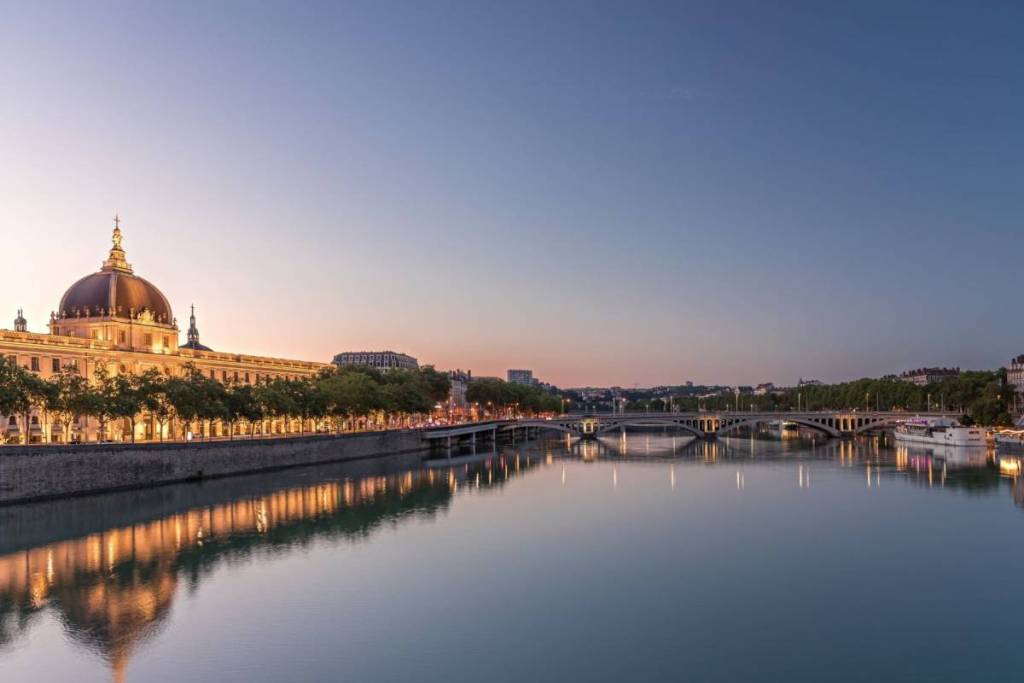
With a monumental facade stretching 400 meters long, the Hôtel-Dieu is truly impressive. In fact, according to our survey conducted on Facebook on May 3, it ranks as your third-favorite building, behind Saint-Jean Cathedral and the Basilica of Fourvière. Total area: 55,000 square meters, equivalent to four Charles de Gaulle-class aircraft carriers. Its renovation project (2010–2019) is the largest privately funded conversion of a historic monument in France.
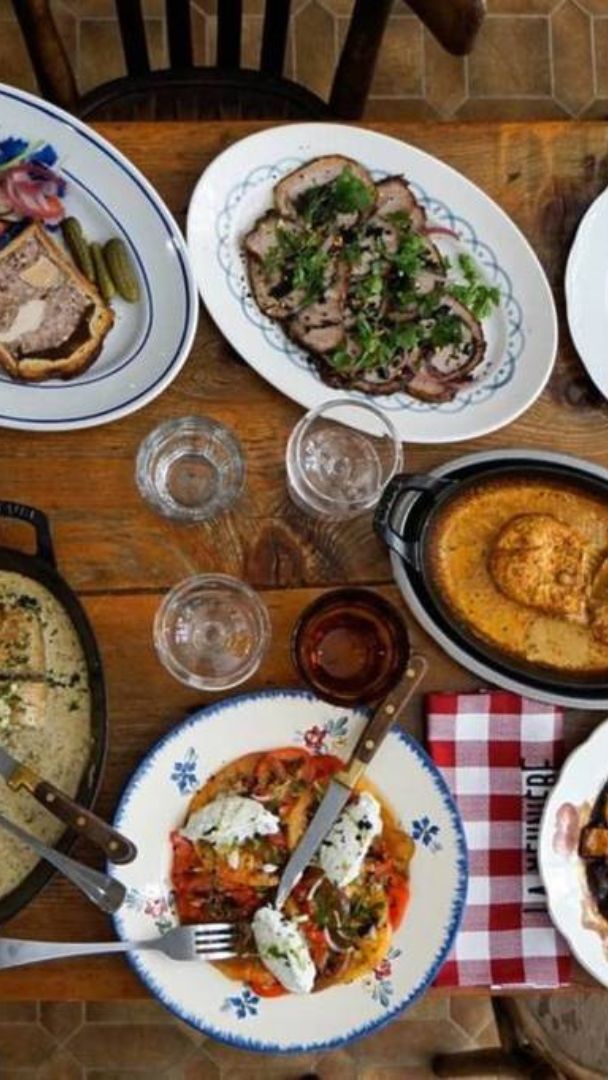
Today, the building—designated a Historic Monument—houses Lyon’s famous Cité internationale de la gastronomie, which was built following UNESCO’s inscription of the French gastronomic meal on the Intangible Cultural Heritage of Humanity list. The vast building also features a wide array of restaurants, terraces, cafés, a 5-star hotel, a coworking space, and several museums. In fact,a magnificent exhibition dedicated to Alphonse Mucha, the father of Art Nouveau, willopen thereon September 4 within its historic walls. Truly, when great minds meet…