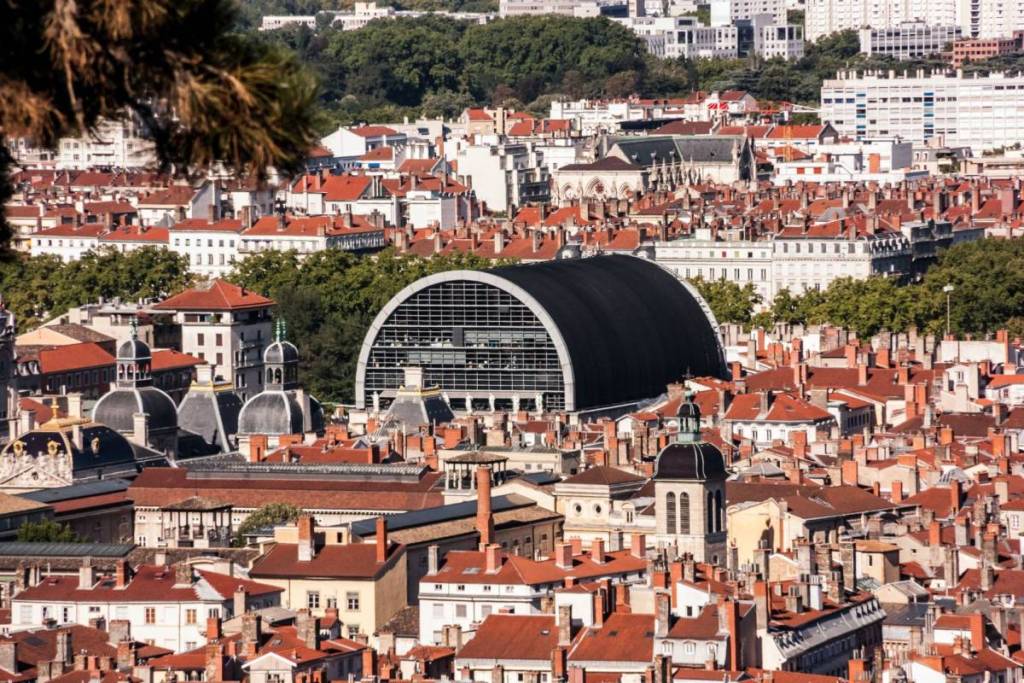

Its architecture reflects the city of Lyon itself: a bridge between the past and the present. If Lyon is recognized by UNESCO as having Outstanding Universal Value, it is above all for its architecture—a sort of historical mille-feuille that stretches from the ancient Roman theater to the Musée des Confluences. The Lyon Opera House is both an oddity and a masterpiece. But isn’t that the very essence of opera: to surprise and amaze?
The Lyon Opera House, an extraordinary monument
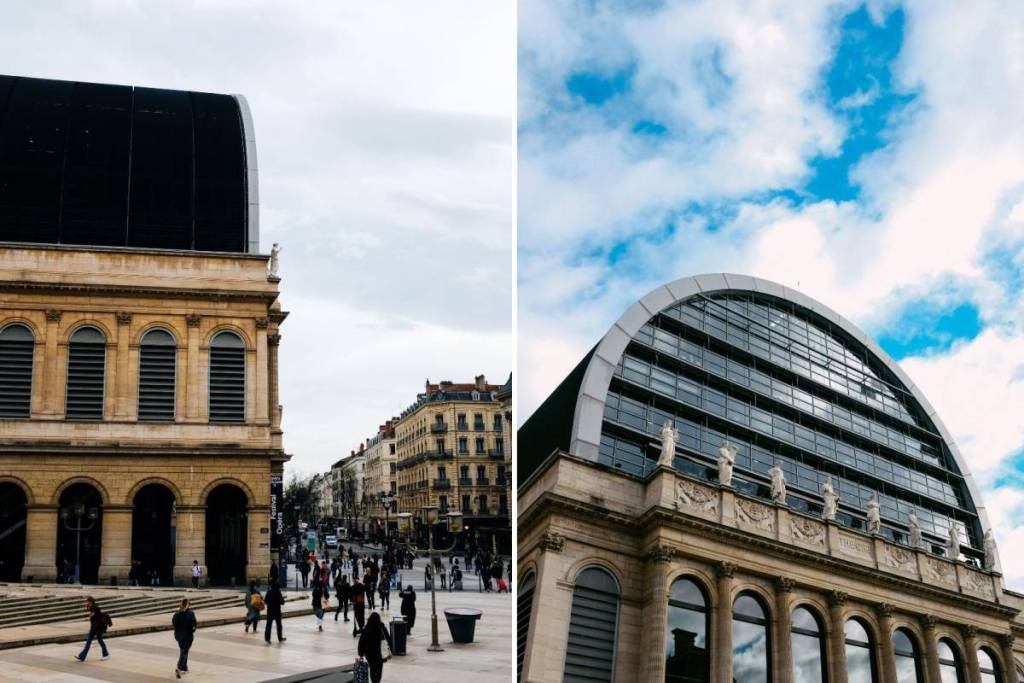
Who can claim to have been shaped by two of the greatest architects of their time? It all began in 1753, when the first performance hall, named the Grand Théâtre, was built based on a design by Jacques-Germain Soufflot, the architect behind, among other things, the Panthéon in Paris. Initially renovated in 1831, it wasn’t until 1989 that Jean Nouvel added his own touch.
The result? A clash of eras between the neoclassical facades and the ultra-modern dome that crowns the building. A clash of generations for some; yet that is the very essence of heritage. For example, the Church of Saint-Nizier, built primarily in the Flamboyant Gothic style, also bears traces of the Renaissance and Neo-Gothic periods. The same is true of the Basilica of Saint-Martin-d’Ainay and of just about all our buildings that have stood the test of time.
Returning to the Lyon Opera House, the transformation goes even further: although it retained the foyer of the old theater dating from 1831, the building was gutted from the inside to incorporate an ultra-modern structure that tripled its original volume. Did you know, for example, that the Lyon Opera House has no fewer than 18 floors, the first five of which are underground? The dome provides enormous additional space with a massive glass roof, where the ballet studios are located. The view from up there is simply magical.
A performance hall unlike any other
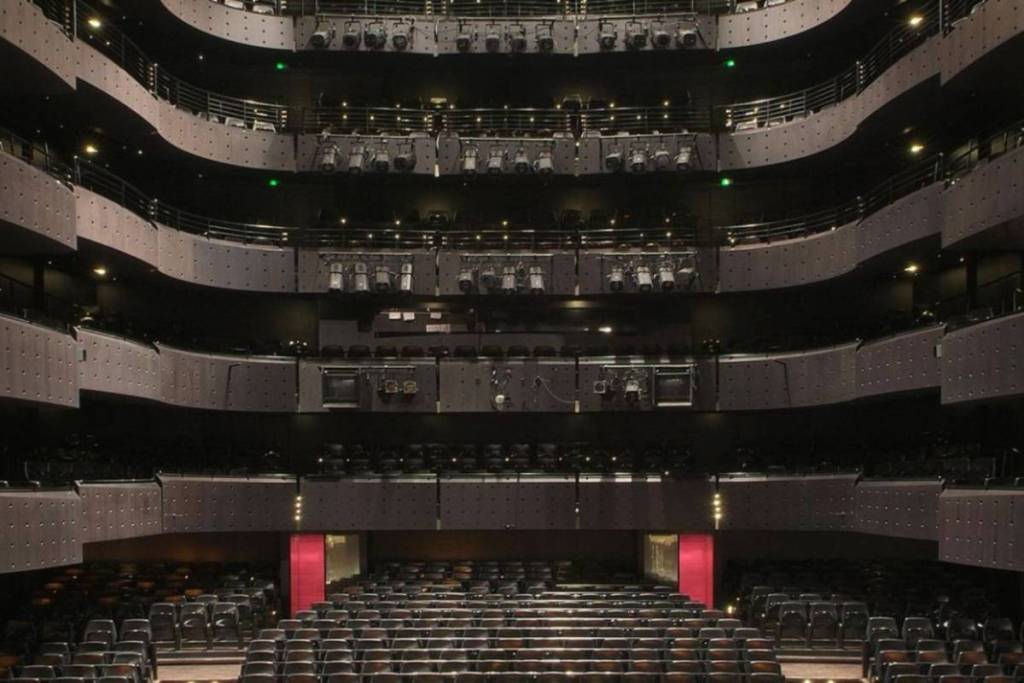
The auditorium, which seats up to 1,100 people, is literally suspended 10 meters above the ground by a monumental metal structure. The reason? To isolate it from the vibrations of the metro that runs directly beneath it. There’s no question of it vibrating for any reason other than the emotions of the performance!
For those lucky enough to have stepped into “the Grand Hall,” it stands in stark contrast to the collective image we have of an opera house. Here, there are no chandeliers or mirrors, let alone gilded trim and red carpets. The design choice is one of simplicity , with black from floor to ceiling to focus the audience’s attention solely on the stage. We also learn that the seats were custom-designed with a perforated shell specifically engineered for the hall’s acoustics.
All of this led to the Lyon Opera House being voted the best opera house in the world in 2017, ahead of the opera houses in Paris and Sydney. We can only invite you, one day, to step inside this building and attend a performance. You’ll leave thoroughly… enchanted!