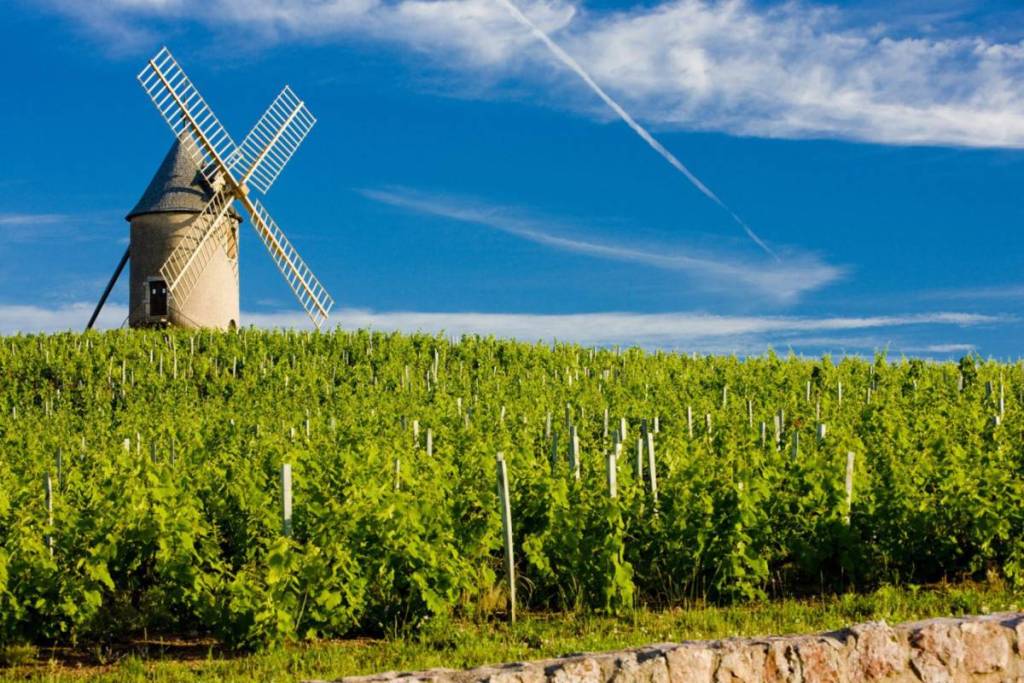

“Beaujolais” is a magical word for anyone from Lyon. It refers to a place just a stone’s throw from home that is unique in the world: recognized as a UNESCO Geopark for its geological richness, it is also home to magnificent villages such asOingt and Beaujeu. Finally, it produces a world-famous wine. Whether you drink wine or not, the word “Beaujolais” evokes something special. Beyond its fame, let’s take a closer look at one of its proudest landmarks, this distinctive area crowned by that legendary structure: the famous Moulin-à-vent.
Moulin-à-vent, a world-renowned appellation d’origine contrôlée on the outskirts of Lyon
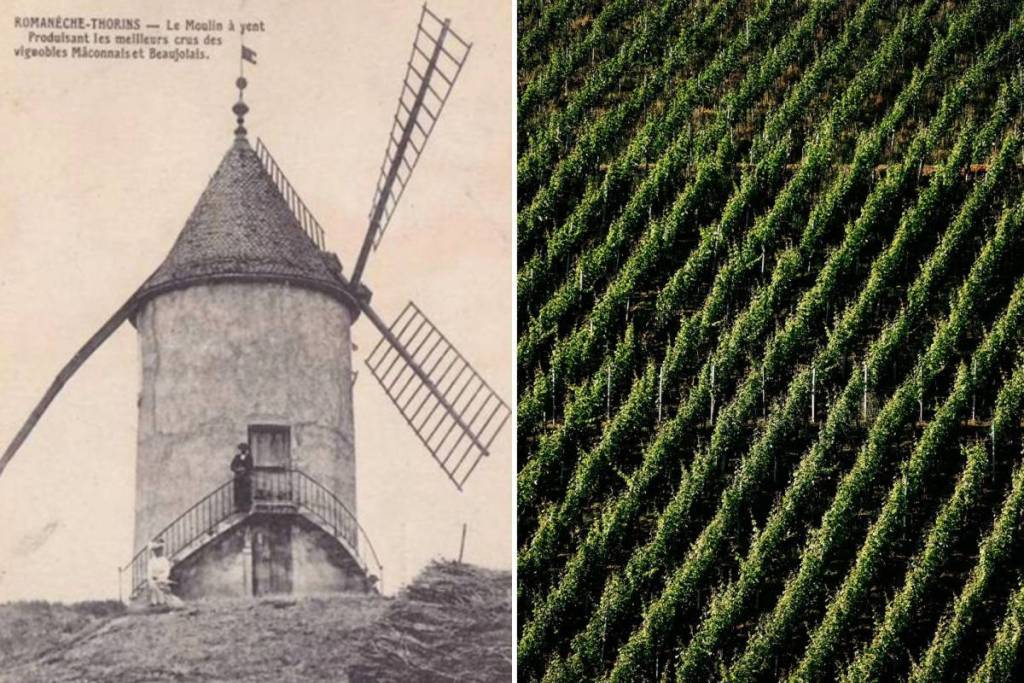
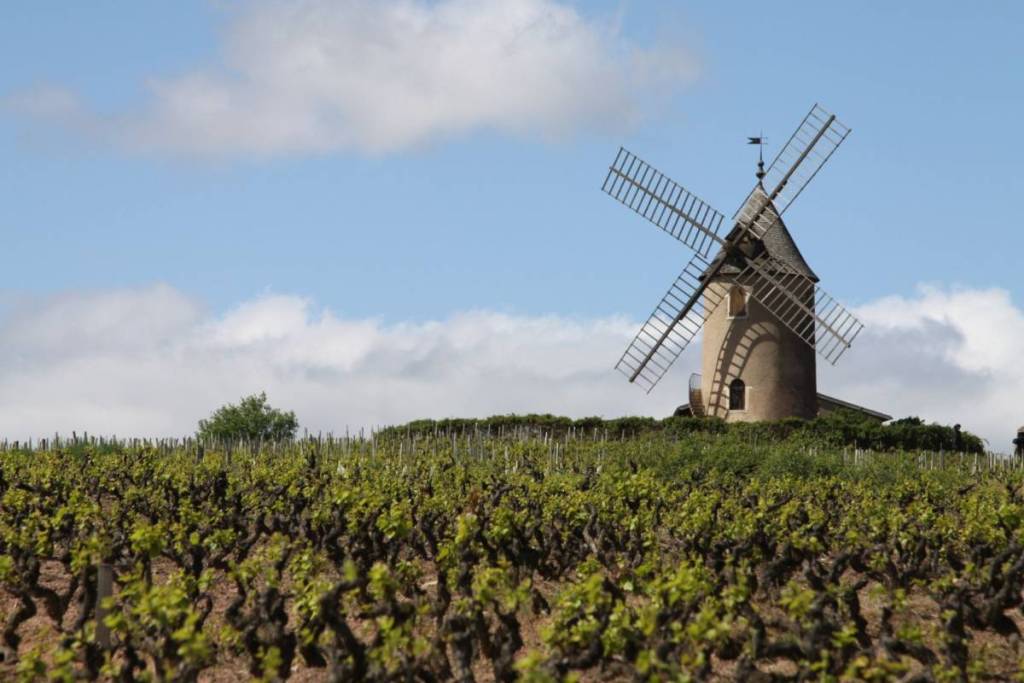
It has overlooked this expanse of vineyards stretching as far as the eye can see, like a lighthouse at sea, since the 15th century. But contrary to what one might think, its role had nothing to do with winemaking. It was used to grind grain for the local residents, and it continued to serve this purpose until the 19th century. Following a storm in 1910 that devastated the entire region, the mill lost its sails, only to regain them… 90 years later. It wasn’t until 1999, on the 75th anniversary of the appellation, that the mill regained its former glory.
The windmill was designated a historic monument as early as 1930. Located on the territories of two municipalities— Chénas in the Rhône department and Romanèche-Thorins in Saône-et-Loire—it overlooks soil of exceptional richness, which is the source of the prestige of the wines produced there. Beaujolais is a geological goldmine, and the soils of Moulin-à-vent are a perfect illustration of this. They are rich in granitic arenites(pink sands), which give the wine the tannins and structure necessary for unique aging potential (between 10 and 20 years).
One of the ten recognized Beaujolais crus
Beaujolais has a regional AOC and ten municipal appellations. The vineyard as a whole covers no less than 3,400 hectares of vines. The vast majority produces primeur wine—the famous Beaujolais Nouveau—a wine intended to be drunk very young, generally by the end of the year it is produced. For Beaujolais, this is the famous third Thursday in November.
Within the broad family of Beaujolais wines, another appellation known as Beaujolais-Villages encompasses the famous ten communal appellations (Beaujolais crus), of which Moulin-à-vent is one. The other major appellations are Brouilly ( 1,200 ha), Morgon ( 1,000 ha), Fleurie ( 750 ha), and Juliénas ( 500 ha). These wines are generally aged wines, meaning they age well over time.
Excessive alcohol consumption is harmful to your health. Please drink responsibly.