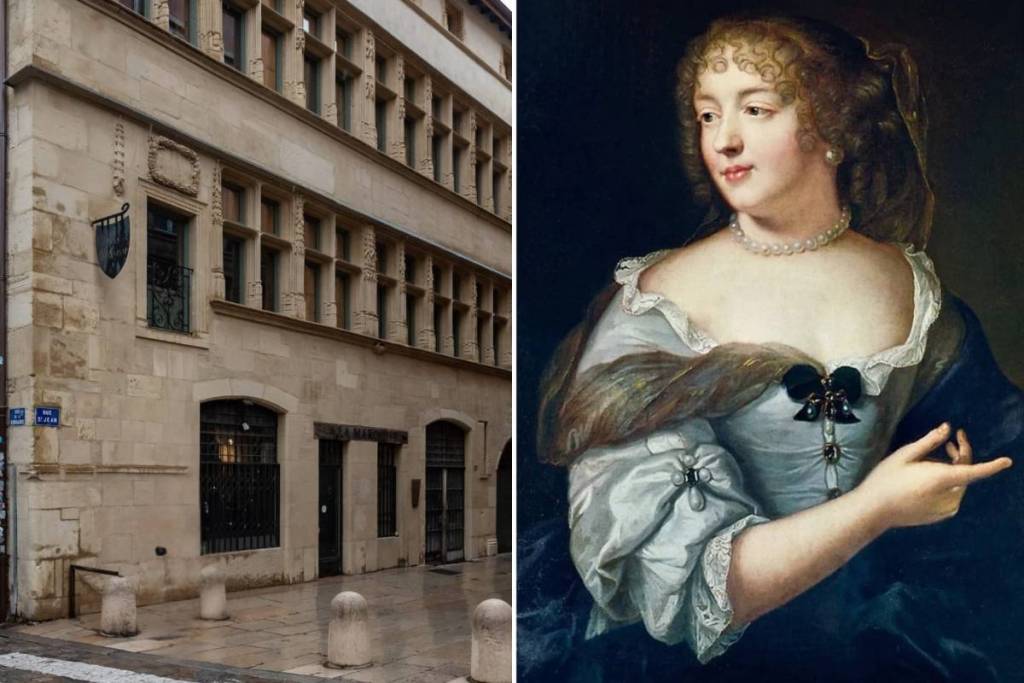

We’re not going to send you to stand in line (especially when the fall weather starts to turn) in front of yet another spot in Lyon: you can discover this one simply by looking up from your phone. At 37 Rue Saint-Jean, at the corner of Rue de la Bombarde, a residence listed as a historic monument served as the home of the Marquise de Sévigné, the famous letter-writer, during her stays in Lyon.
The Marquise de Sévigné and Lyon

We’ve all heard the name of the Marquise de Sévigné, but we don’t necessarily know exactly who she was. We promise, we won’t hold it against you if you’ve never read any of her works outside of those (nightmarish) French high school exam passages.
Marie de Rabutin-Chantal, the Marquise de Sévigné (1626–1696), was a major figure in 17th-century French literature. She rubbed shoulders with all the great figures of her time, from Louis XIV to Jean de la Fontaine. She is famous for her extensive correspondence, primarily addressed to her daughter, the Countess of Grignan. These letters offer an exceptional, intimate glimpse into high society and the court of Louis XIV.
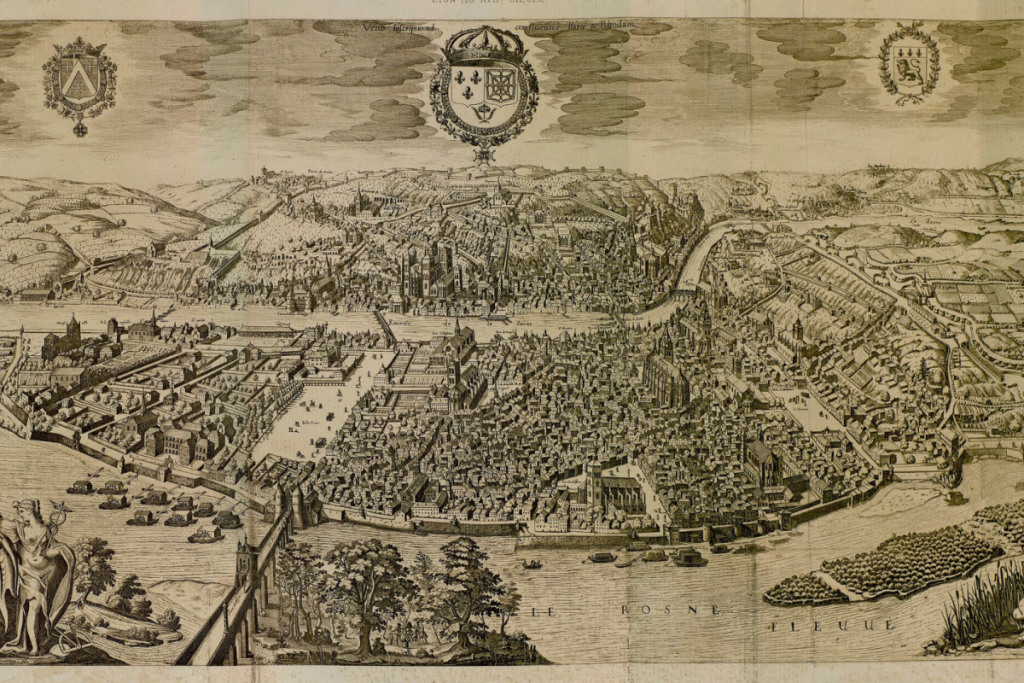
Her connection to Lyon was, above all, that of an essential stopover, serving as a strong geographical and emotional anchor. In 1671, her daughter left Paris to settle in Provence. Located on the natural route connecting Paris to the south of France, Lyon was a major stop on the Marquise’s journey. In her letters, Madame de Sévigné follows her daughter’s journey, particularly dreading the sometimes perilous navigation on the Rhône as it leaves Lyon.
Chamarier: a title worth its weight in… keys!
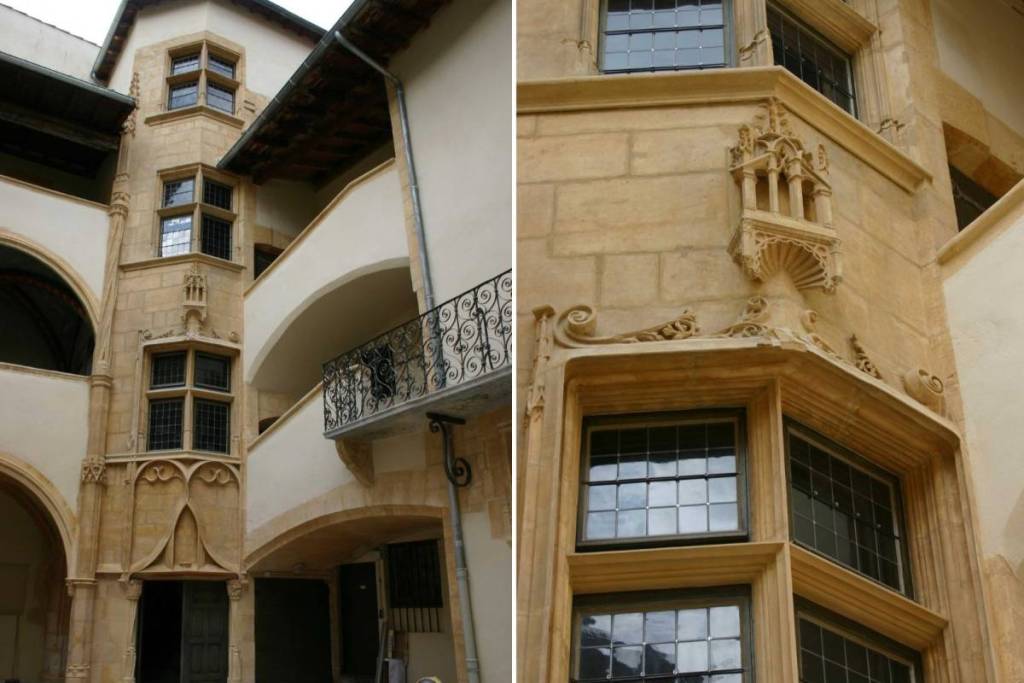
The name Chamarier comes from the Latin *cameriarus*, meaning the financial steward of the cathedral bishop. The chamariers, high-ranking officials of the Saint-Jean chapter, lived there. The house, built in the mid-15th century, stood at the north gate of the cloister of Saint-Jean Cathedral. It is also known as the Hôtel d’Estaing, named after François d’Estaing, who rebuilt it in the 16th century.
The position wasn’t limited to bookkeeping. The chamarier managed the cloister and collected taxes during the fairs. He also held the keys to the six gates of the city’s fortifications and was in charge of security, justice, and public works, with twelve watchmen under his command. Suffice it to say, it was important to get along with him!
Inside, the courtyard conceals a gallery adorned with Italian-style frescoes and a spiral staircase featuring Gothic motifs. The Renaissance-style well and fountain are attributed to the Lyon architect Philibert Delorme. Experts consider it a rare example of a Renaissance townhouse, listed as a historic monument since 1943 and located within the UNESCO-designated Old Lyon district.
How can you visit the house?
The house is part of the guided heritage tours of Old Lyon, and you’re free to admire the exterior on your own. To get there, take Metro Line D to Vieux-Lyon Cathédrale Saint-Jean. Buses C20, 27, and 31 stop at the same location, and the Saint-Just and Fourvière funicular departs nearby. In short, be sure to include this spot on your next stroll, between the cathedral and the narrow streets: the marquise had great taste, and you won’t regret it!