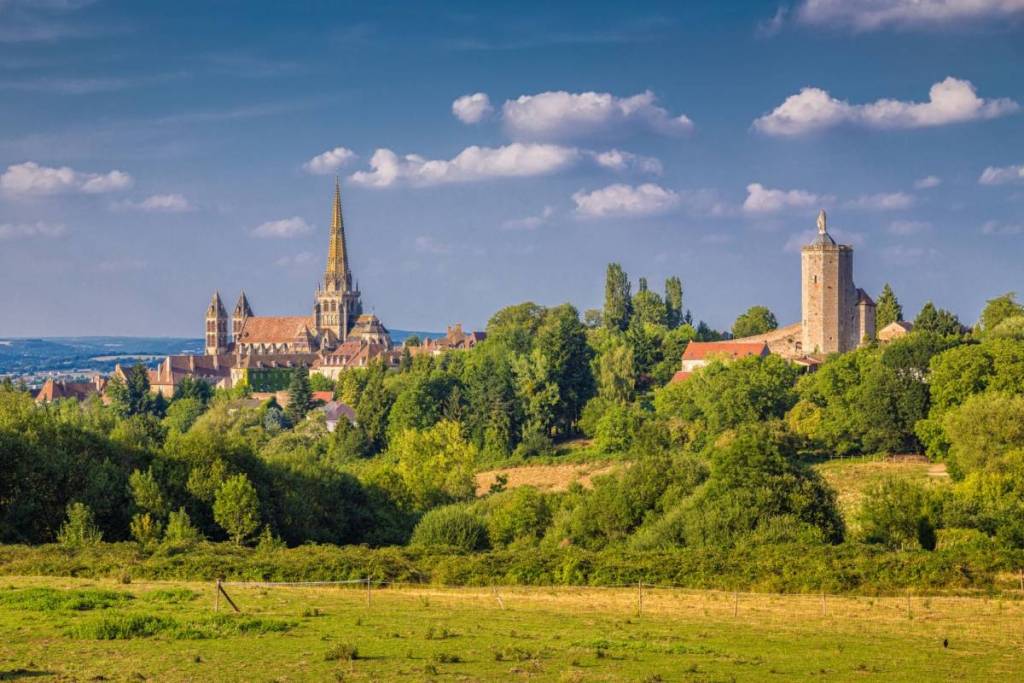

Given its architectural richness and its role in history, one might compare it to a smaller version of Lyon. Located 150 kilometers further north, this city surprises us in all the wonder that this verb conveys. Relatively small in size, it amazes with the density of its heritage, which spans the entire timeline of our history. It’s a city well worth the trip, especially since it lies at the gateway to one of France’s most beautiful natural parks.
Autun, “the other capital of Gaul”
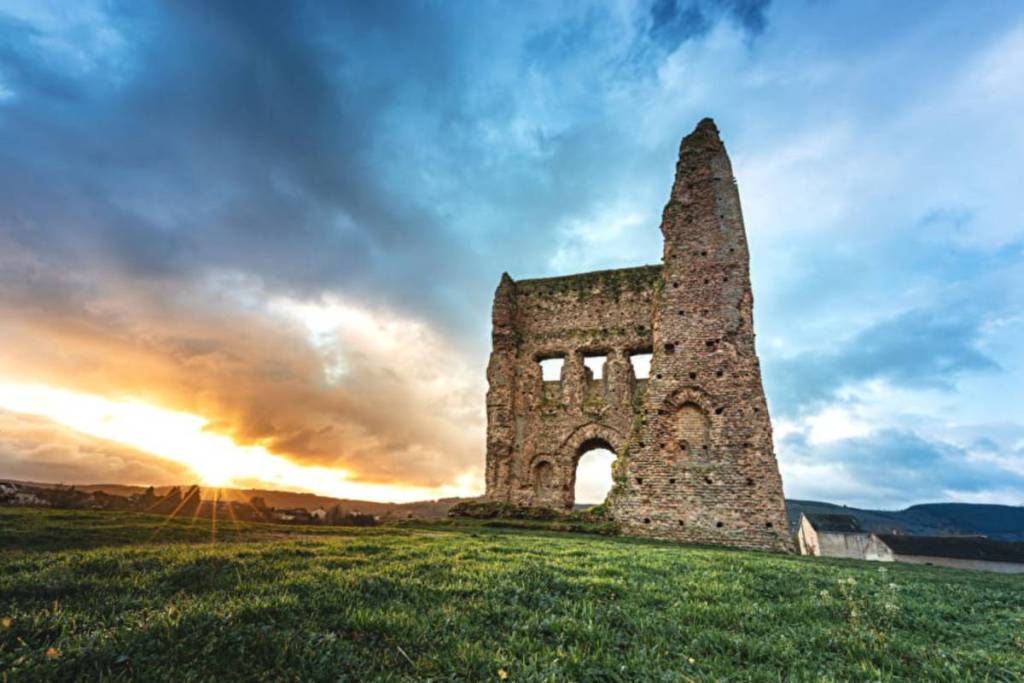
From there to questioning the well-founded status of Lyon as the capital of Gaul—rest assured, no. But delving into the cityof Autun and its fascinating history can only delight ushistory buffs. The first distinctive feature of Autun lies in its creation. Unlike the vast majority of cities that developed over time, Autun was built “from scratch” by Emperor Augustus for a specific purpose: to give Gaul a Roman city worthy of the name. As a result—and this is extremely rare—we can pinpoint the city’s exact founding date : the year 15 BCE.
During Antiquity and throughout the Middle Ages, Autun enjoyed remarkable military and religious influence. Its wealth attracted envy, and the city was plundered many times—first by the Saracens, then by the Normans. Despite everything, its architecture remains admirable today, as does its ancient theater, which could seat 20,000 people. It was quite simply the largest theater in the Western Roman Empire. To give our readers a point of comparison, it was twice the size of the theater in Lyon at its peak, and even larger than the LDLC Arena, which can seat (only) 12,000 people. Those Romans were crazy!
Add to that an amphitheater (now lost), a monumental 24-meter-high Celtic-Roman temple, a 33-meter-high pyramid dating from the 1st century CE, and a cathedral listed among the first buildings in France to be designated as historic monuments as early as 1840—and you’ll have only a brief glimpse of Autun’s remarkable heritage. Indeed, the city is a veritable open-air museum of antiquity and the Middle Ages.
Finally, on a more anecdotal note, Napoleon Bonaparte, then a young child, stayed there for a few months (in 1779) to perfect his French. A native of Corsica, the future emperor had not yet fully mastered the language of Molière and, along with his brothers Joseph and Lucien, made a stop in Autun, Burgundy, to brush up on his grammar before his coup d’état on 18 Brumaire…
Autun, at the gateway to the Morvan
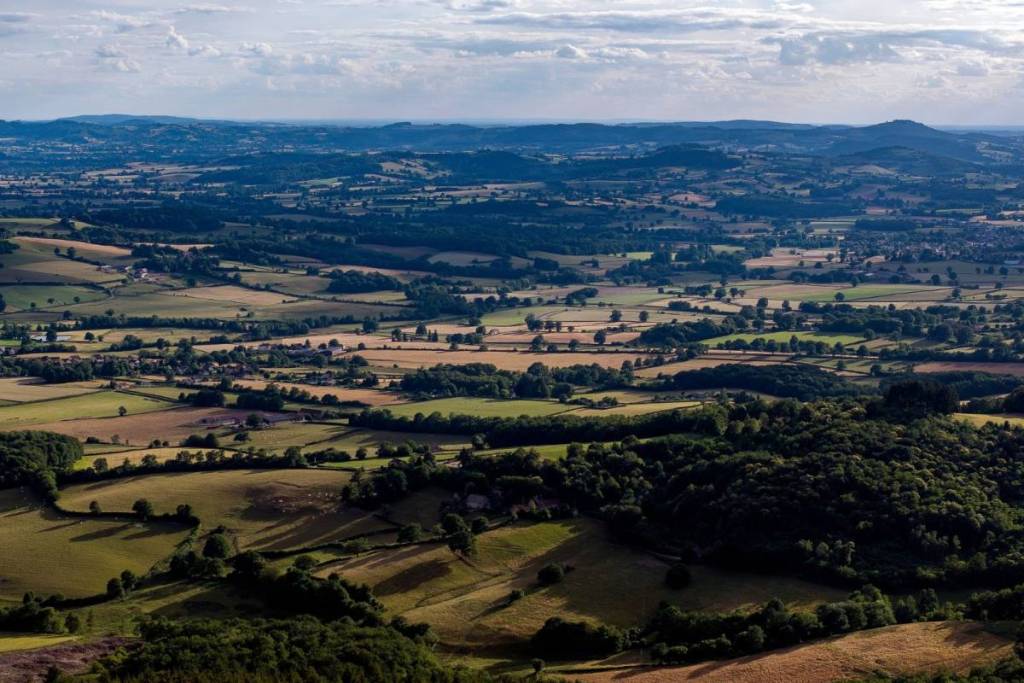
If you ever find yourself visiting Autun, we highly recommend extending your trip a bit further north to explore the Morvan, a natural treasure that remains all too little-known in France. This natural park spans a large part of Burgundy and ends at the foot of the Vézelay hill, the first French site to be designated a UNESCO World Heritage Site.
The Morvan is a 300,000-hectare green lung, teeming with exceptional flora and fauna. Here, it’s simple: everything is green. With its lakes, forests, and expanses of meadows and fields, the Morvan exudes nature. There are no fewer than 1,500 km of hiking trails—and just as many reasons to visit. Take note!