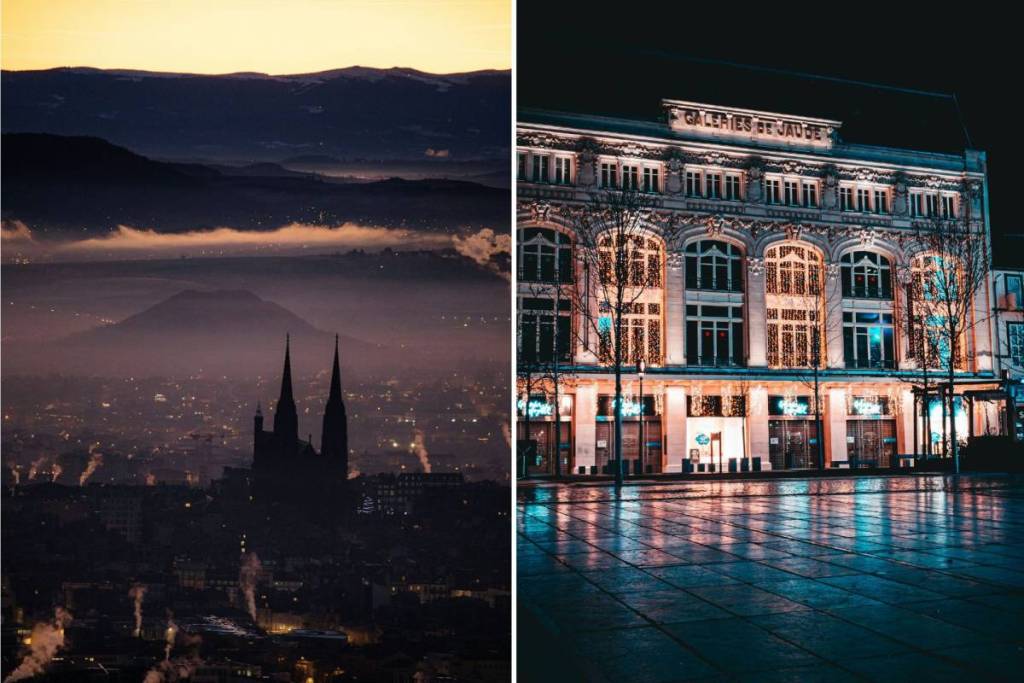

The Auvergne-Rhône-Alpes region is a real gold mine. And the great thing about Lyon, located right in the center of it all, is that it’s right at your fingertips. Looking for nature? Head to the Chartreuse Regional Nature Park and its 1,500 km of trails. History? The Chauvet Cave in the Ardèche, widely regarded as humanity’s first great masterpiece. Cultural heritage? Head over to visit Le Corbusier’s Sainte-Marie de La Tourette convent just outside Lyon. Fine dining? Head to the Beaujolais Wine Route and its UNESCO-recognized geopark. This time, we’re taking you to a city everyone knows, but one that deserves even more recognition: Clermont-Ferrand!
Clermont-Ferrand, at the heart of France’s history and its vibrant energy
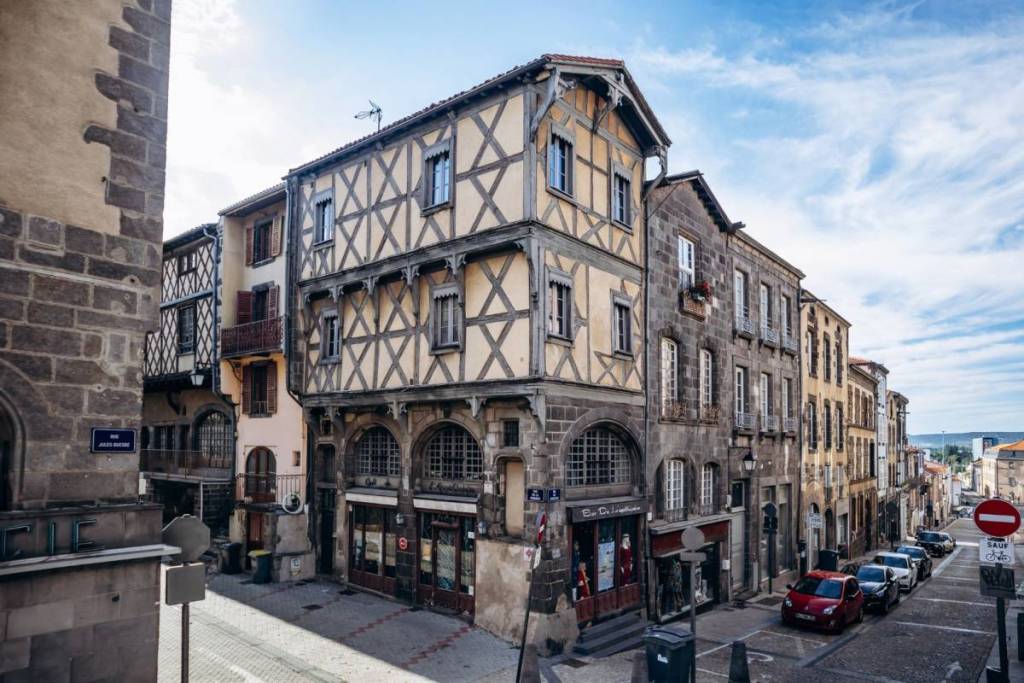
Just like Lyon, Vienne, or Autun, Clermont-Ferrand spans over 2,000 years of history. We learn that its origins date back to the 1st century. Over time, the city would experience a few visits—some friendly, some less so: the Visigoths, the Vikings, and then the Normans pillaged and ransacked the city. But Clermont-Ferrand would hold its ground! Just like Vercingetorix, depicted in a monumental statue on Place de Jaude. This sculpture was created by Auguste Bartholdi, the same artist responsible for the Bartholdi Fountain in Lyon and the Statue of Liberty in New York… quite a story!
Today’s Clermont-Ferrand is far from being a city focused solely on its past… it’s a bustling place! With nearly 40,000 students and 6,000 researchers, it is the first city in France to join UNESCO’s “Learning Cities” network. On the cultural front, it hosts quite simply the world’s largest short film festival. For Lyon, the cradle of cinema, it’s hard not to be impressed. The next edition will take place from January 29 to February 7, 2027.
When it comes to sports, its rugby team is always at the top of the European scene. Add to that a stunning natural environment—the Chaîne des Puys and its volcanoes (a UNESCO World Heritage Site)—and you have a city that deserves our full attention.
Clermont-Ferrand: A Colossal Wealth of Heritage
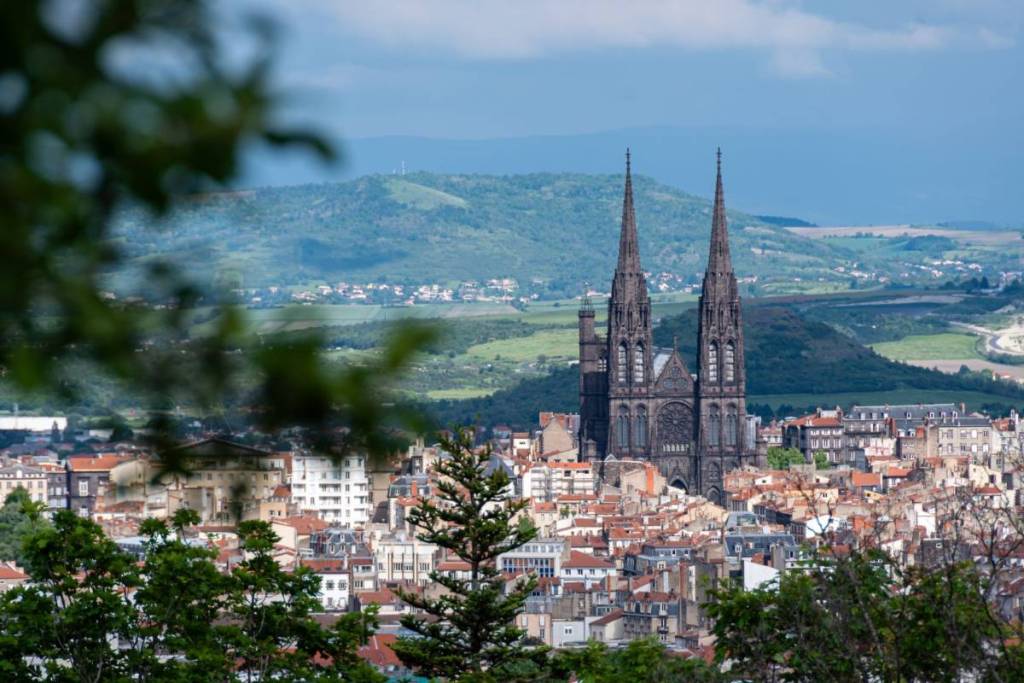
Just like the 108-meter-tall cathedral (nearly twice the height of the Basilica of Fourvière), Clermont-Ferrand’s architectural heritage is immense. Its Romanesque basilica, Notre-Dame-du-Port, built in the 12th century, has been designated a UNESCO World Heritage Site, just like Le Puy-en-Velay as part of the Routes of Santiago de Compostela. Beyond these two religious buildings, the historic center is brimming with squares, narrow streets, and mansions, offering visitors a true journey back in time. For one of the distinctive features of the capital of Auvergne is that it was originally formed from two distinct cities: Clermont and Montferrand. It was not until the 17th century, under Louis XIII (through the Edict of Troyes in 1630), that the two towns merged to form a single city.
While Paris remains unbeatable in terms of the absolute number of historic monuments (1,885), the picture changes completely when you adjust that figure for population. There’s one historic monument for every 1,115 residents in Paris, whereas in Clermont-Ferrand, there’s one monument for every 812 residents. (That’s 1 monument for every 1,800 residents in Lyon… but shh! It’s a secret!)