
In 1998, Vieux-Lyon was designated a UNESCO World Heritage Site, and when you take a closer look at its treasures, it’s easy to see why. From its ancient theater to its famous traboules, from the Maison Brunett t Saint-Jean-Baptiste Cathedral, everything is a source of wonder. Lyon has skillfully preserved this architectural continuity without ever breaking it over more than 2,000 years of history. In this open-air museum, a mystery remains unsolved, but this one lies underground…
The underground labyrinth of fish bones
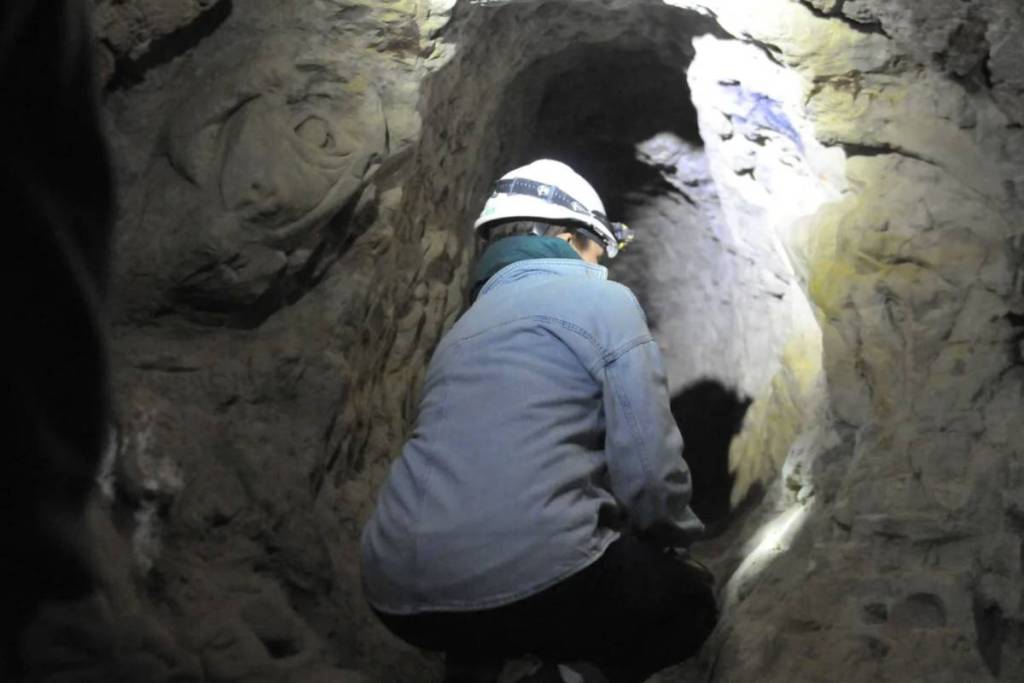
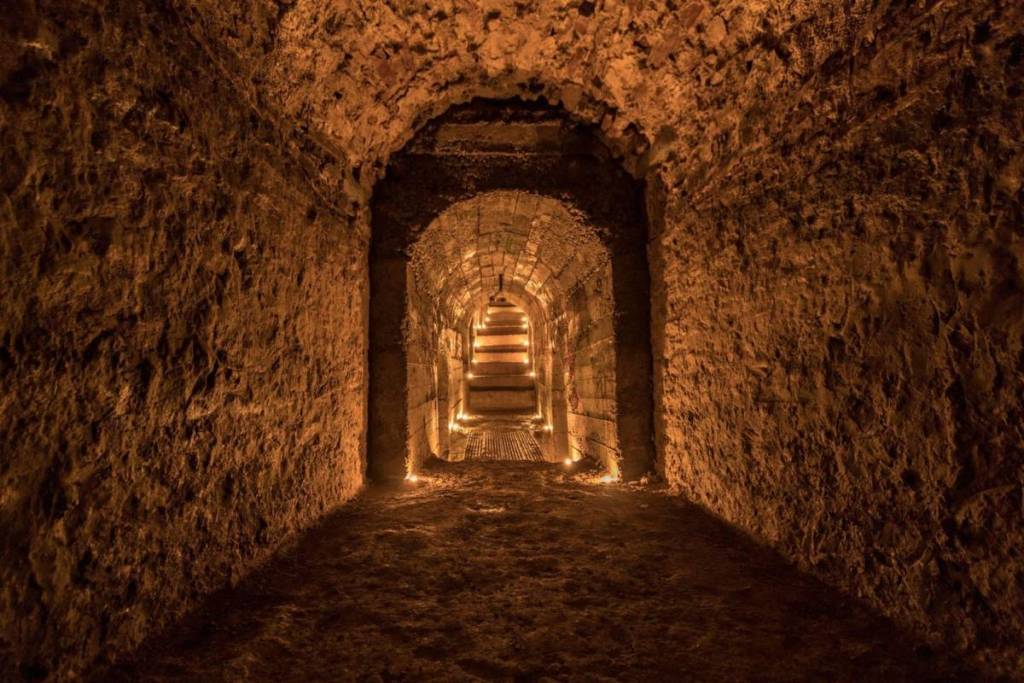
Here is a site that would have fascinated Tintin, Sherlock Holmes, or even Indiana Jones! The vast underground network of 1,400 meters of galleries derives its uniqueness from its XXL fishbone layout : the main gallery is 156 meters long—that’s quite a backbone! The tunnels are then divided into two sub-sections, each consisting of perpendicular tunnels, chambers, branches, and shafts connecting the different parts. But what stands out when looking at the big picture is that it seems the tunnels were never truly completed—and, worse still, that they were never actually used… It is estimated that the entire complex represents no less than 12,000 m³of earth to be excavated.
Initial findings suggested a 16th-century structure that was part of a defensive complex in Croix-Rousse, where the old citadel once stood. But in 2013, a reversal of the situation shook things up. New technologies, particularly the use of carbon-14 dating, have yielded a completely different conclusion: the structure dates back to antiquity, to the first century CE…
Fish bones in the belly of Lyon—but why?
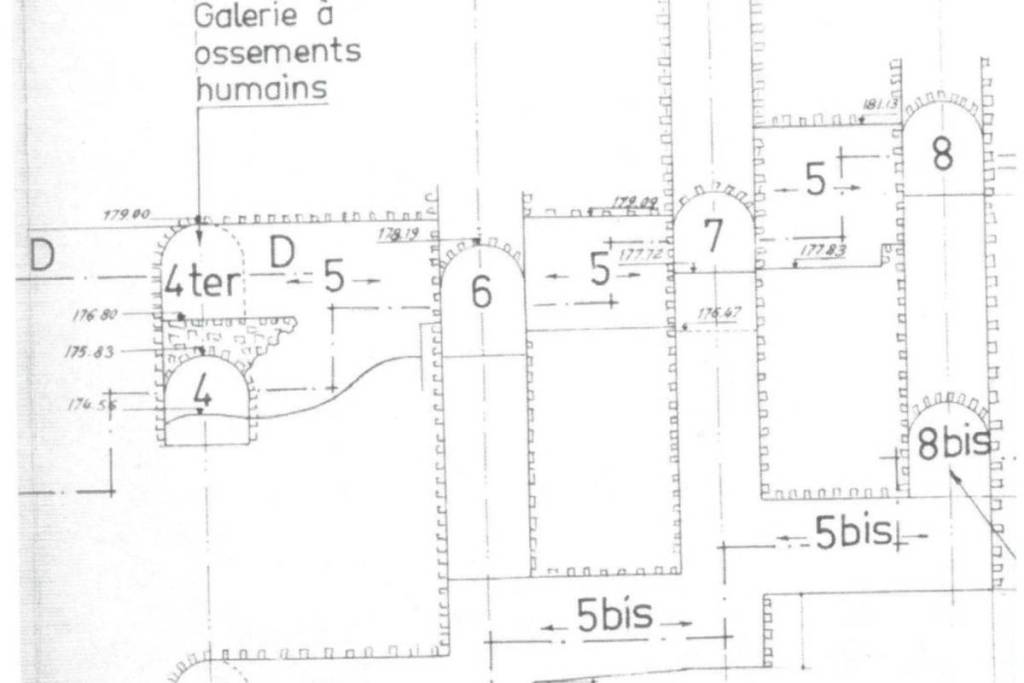
And that’s where it gets even more interesting. What were these underground galleries used for? Just like the mysteries surrounding Île Barbe, speculation is rife. If they do indeed date back to antiquity, this is a network that required colossal amounts of labor—just imagine! In 1950, an archaeological excavation uncovered the body of a Roman soldier who died during the Battle of Lugdunum (197 AD) as well as coins from the same period… Others suggest the possibility that these arches were used to store the Templars’ treasure when Guillaume de Beaujeu (a native of the Beaujolais region) was Grand Master of the Order at the end of the 13th century…
There is very little (if any)information in the city archives confirming the existence of this structure. In fact, we’ve learned that some researchers had to travel all the way to Turin to find information about it. In any case, the lack of official documents adds another layer of mystery to this story, which was already full of intrigue… In 2024, a request was filed to have these remains designated as cultural heritage within the UNESCO framework, calling for the protection and enhancement of the site as well as clarification of its legal status.
Needless to say, the Fish Bones are closed to the general public, buta virtual tour is nevertheless available.