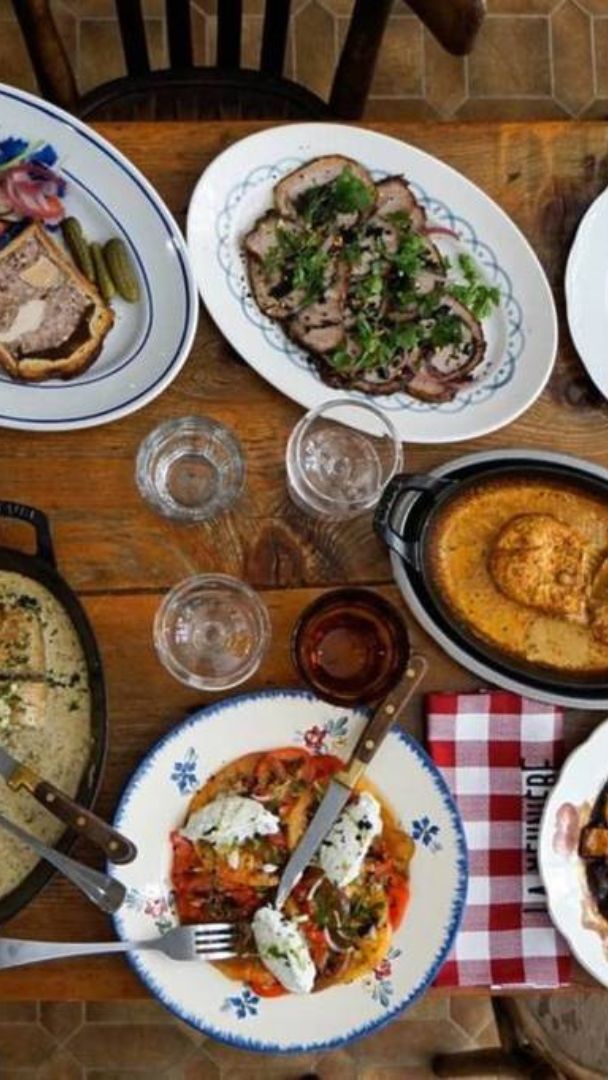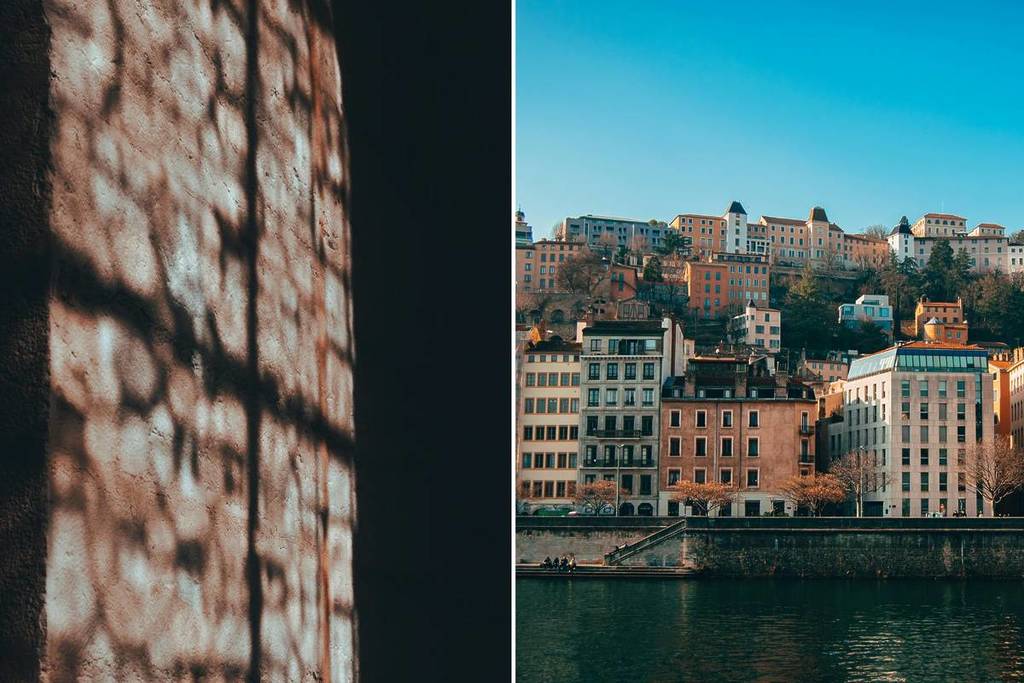
Lyon is a city of many facets, and its unique history has given it a worldwide reputation for many reasons. The invention of cinema, animal medicine or the weaving loom, the place of gastronomy with its famous bouchons and the tradition of mâchons… The list is long, which is why UNESCO classified it as an “Outstanding Universal Value” in 1998. Let’s open a door once again: Lyon is an exceptional city. And we’re going to be talking about doors, because this time we’re going to be talking about architecture.
Traboules, Lyon’s DNA
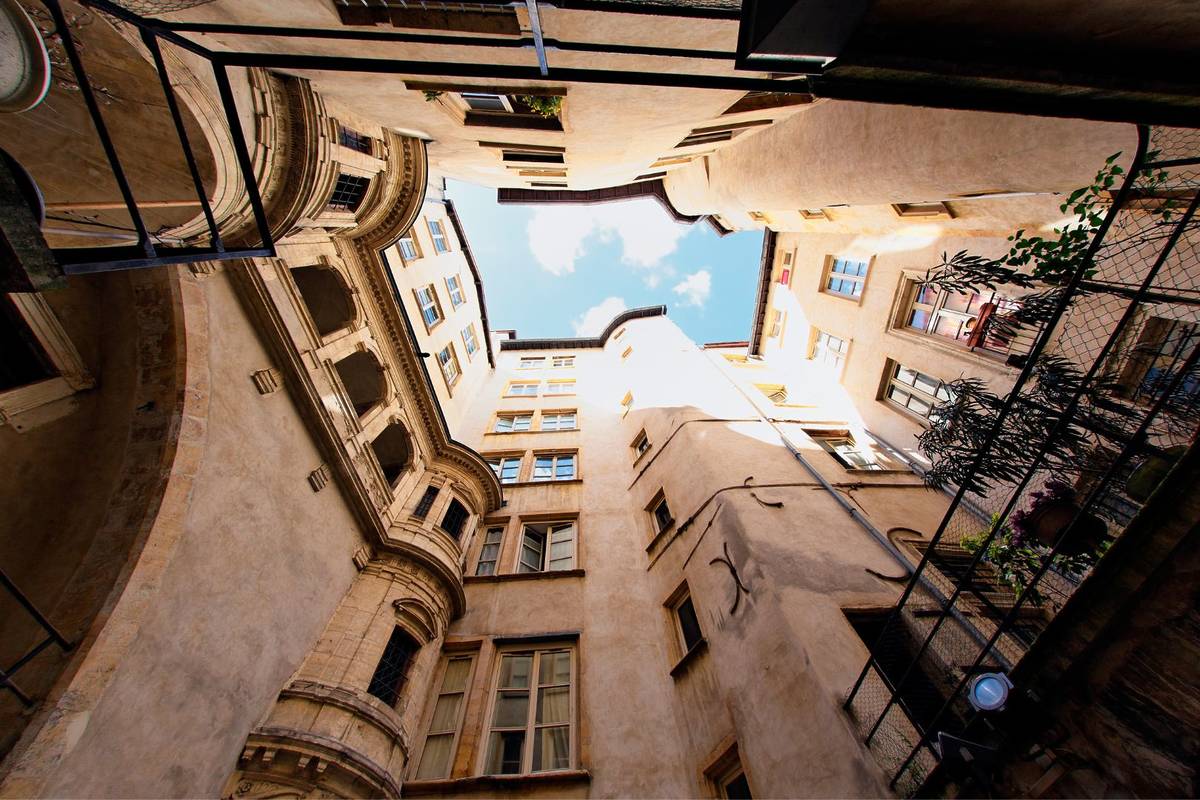
Paul Bocuse strolling through a traboule chewing on a brioche sausage… it’s hard to imagine a more Lyonnais image. For if Lyon excels in gastronomy, it also excels in its old stones, with the famous traboules, a unique feature in the world! Detours, vaulted ceilings, façades, galleries, corridors, staircases, back doors, passageways, tunnels… a magical universe in the heart of Lyon, where you’d be forgiven for imagining you’d run into a D’Artagnan or a Quasimodo, such are the mystery and wonder of these passages.
There are no fewer than 500 traboules in Lyon, divided between Vieux Lyon, the Croix-Rousse slopes and the Presqu’île, but only 80 are open to the public. It’s hard to list them all, but the best way to discover them is to push open the doors! If it’s still possible to visit them today, it’s thanks to the convention that brings together several players in this unique historical heritage. A number of bronze plaques (Vieux Lyon) and lion-head plaques (Croix-Rousse) point the way. Traboule de la Maison Brunet, Bullioud, Chamarier, Tour Rose and Cour des Voraces are all fascinating places to discover. But if you don’t want to miss out on any of them, you can find the full list of those open to the public here (updated May 2025).
Nearly 500 traboules for over 500 years of history
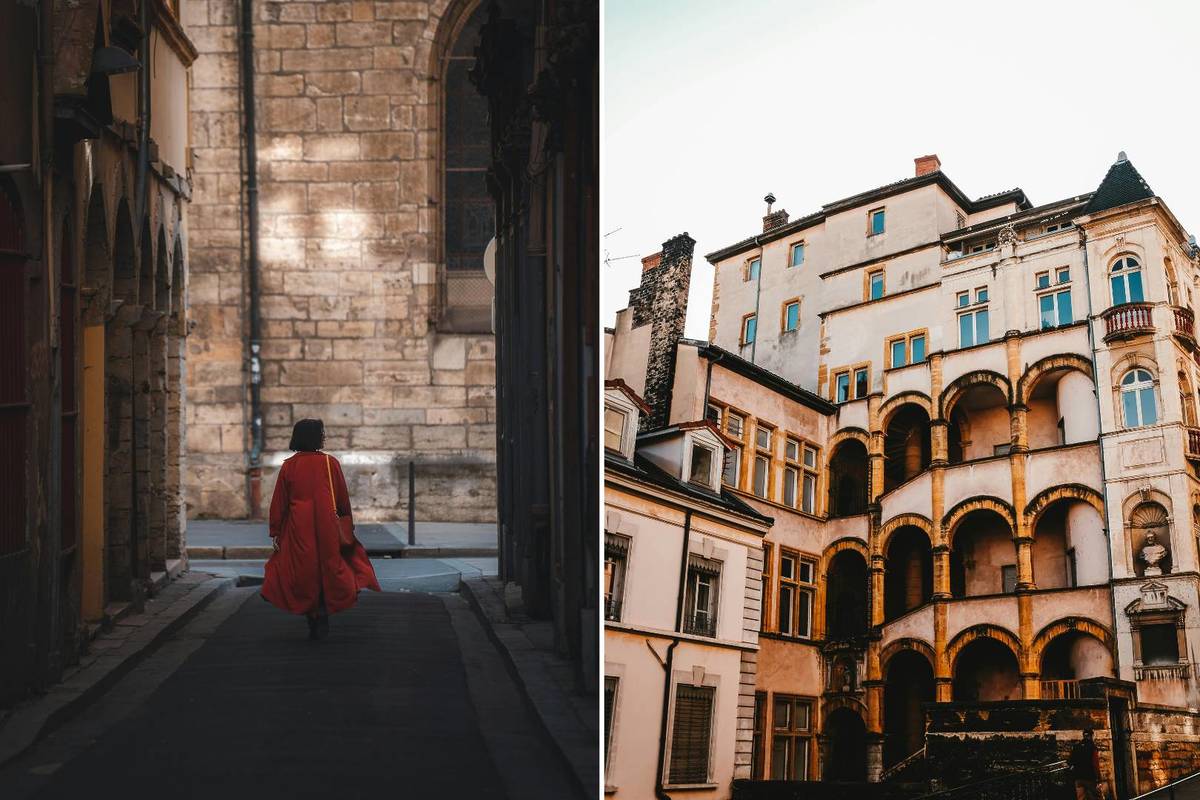
Although the first traboules are thought to date back to the 4th century, to facilitate access to the Saône River, it was during the Renaissance, in the 16th century, that traboules flourished in Lyon. Lyon’s monopoly on silk production in 1540 considerably boosted the local economy. Traboules developed, enabling weavers to transport their fabrics safely away from bad weather and bandits.
Later, during the Canuts revolt, the latter used them to sneak in and escape repression. History repeated itself during the Second World War, when resistance fighters used these mazes to escape the Gestapo. Much of the struggle in Lyon, a hotbed of the Resistance, took place in these corridors, where suitcases and documents were discreetly exchanged…