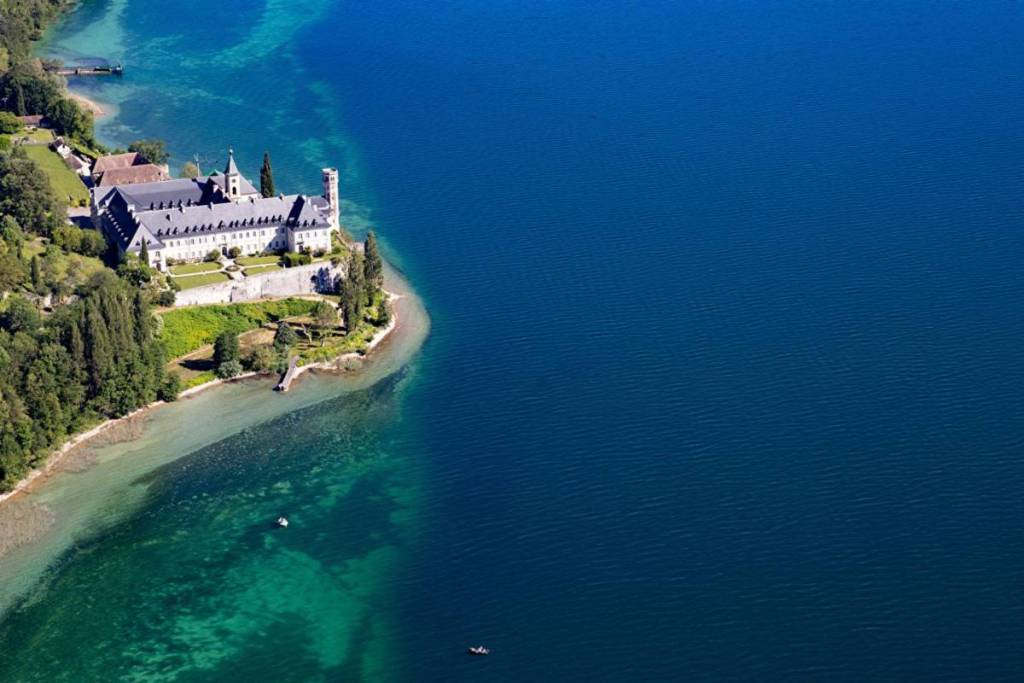

You might think you’re in a James Bond movie with this immense building hugging the shores of Lake Bourget, France’s largest natural lake. Yet this place is no fictional creation from a movie studio: it truly exists just two hours from Lyon. Hautecombe Abbey is one of the must-see sites in the Auvergne-Rhône-Alpes region.
The Royal Abbey of Hautecombe, burial ground of the House of Savoy
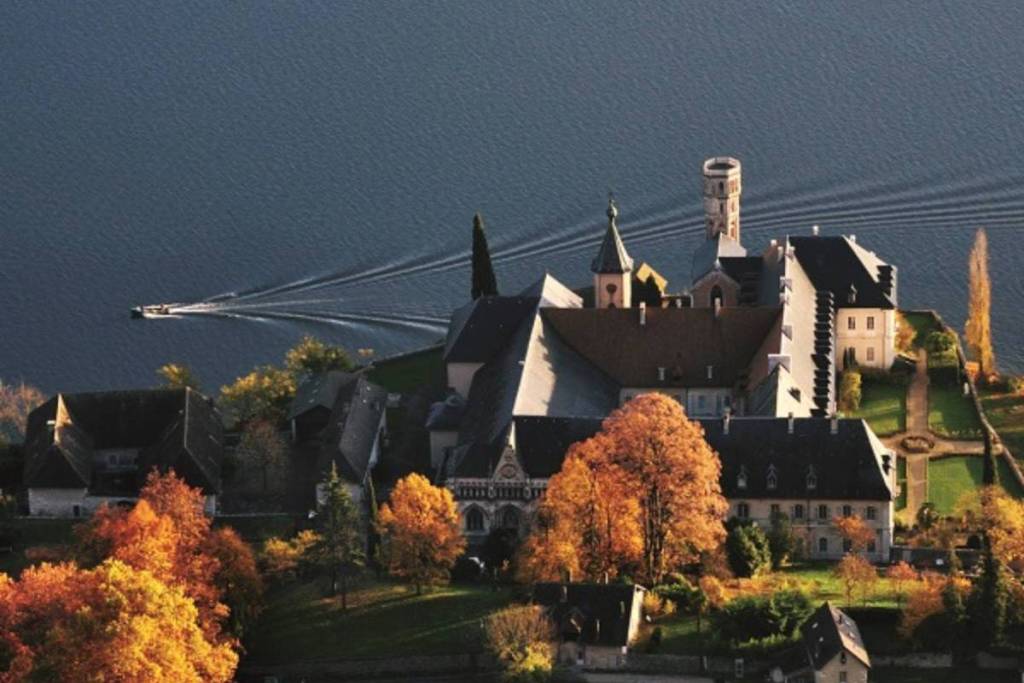
Hautecombe Abbey is no exception to the rule of these centuries-old buildings which, having stood the test of time like Saint-Nizier Church in Lyon or the Saint-Philibert Cloister in Tournus, have evolved alongside history and its upheavals. Built in the 12th century to be occupied at the time by the Cistercians, Hautecombe Abbey became a stronghold of religion in the Middle Ages, to the point that many popes stayed there, some of whom were even born there, such as Celestine IV and Nicholas III. But history is far from being a long, quiet river. The abbey experienced several twists and turns, passing from one order to another before falling into decline beginning in the 15th century. The French Revolution dealt the fatal blow: the site was completely looted and largely destroyed.
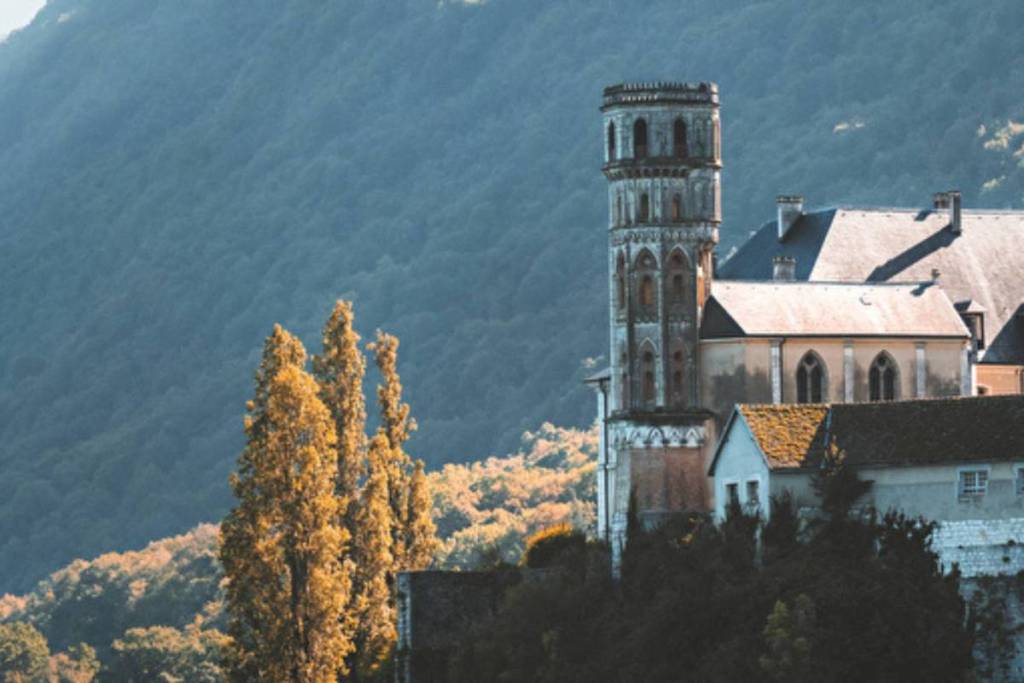
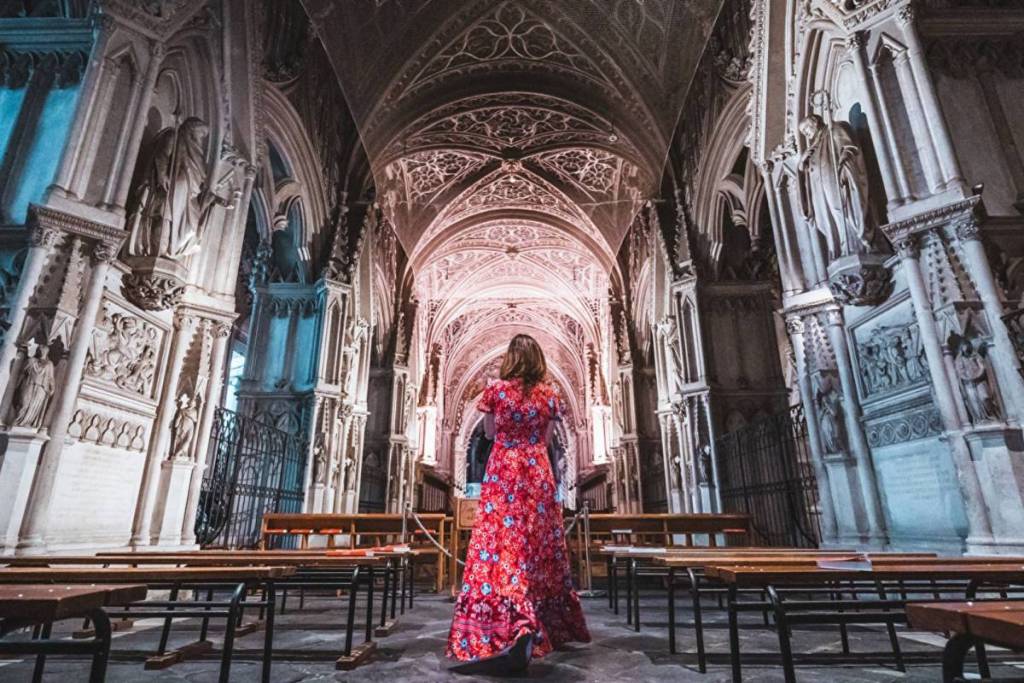
It wasn’t until the 19th century that the Duchy of Savoy, through the King of Piedmont-Sardinia, Charles-Félix, had the site restored to serve as a necropolis in honor of his ancestors. The Cistercian monks returned in 1826, later making way for the Benedictine community, which settled there in 1922. Since 1992, the Chemin Neuf community has been responsible for maintaining the site and welcoming visitors. Today, visitors can explore the abbey church, as well as the gardens, the Marie-Christine Tower, the King’s Terrace, and the reception rooms of the royal apartments.
The Hautecombe site, a UNESCO World Heritage Site
We learn that long before the abbey was built, the Hautecombe site was occupied during prehistoric times asa lake-dwelling settlement that has since disappeared. But this site, like 110 others throughout the Alps, was designated in 2011 by UNESCO as a prehistoric pile-dwelling site. Pile-what? Pile-dwellings, meaning structures built on stilts above the water. Those listed by UNESCO date from 5000 to 500 B.C.
For while the site today features a relatively recent 19th-century structure (with some 12th-century remains), these grounds have been inhabited in turn, and as early as the 1st century CE, a Gallo-Roman temple was built right here. If you happen to be tempted, don’t forget to visit the Mont du Chat lookout to admire Lake Bourget from over 1,500 meters above sea level!