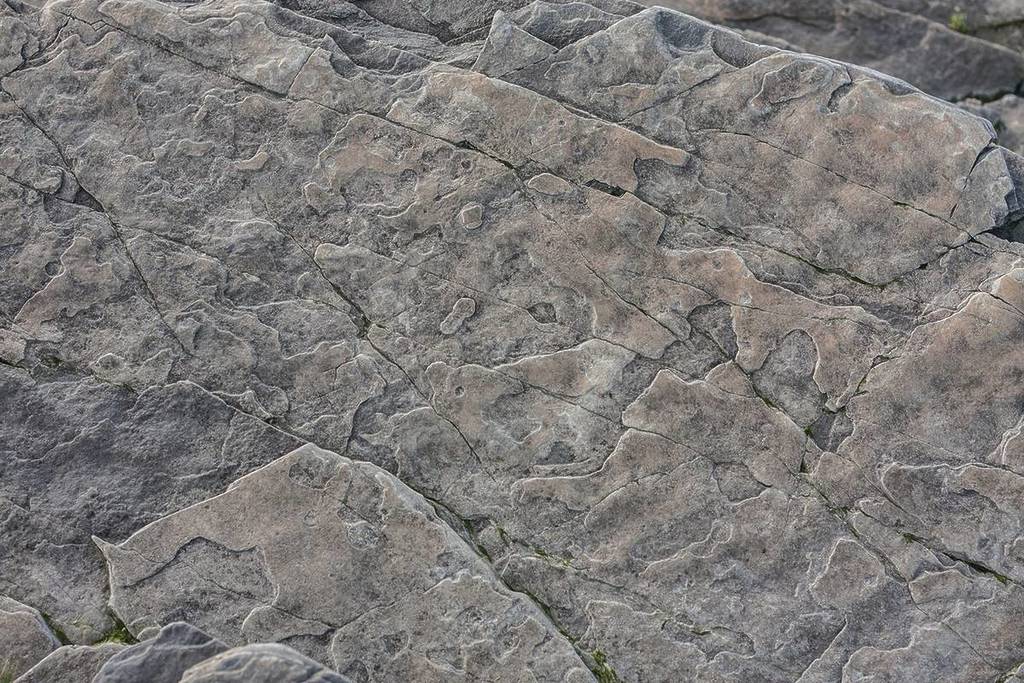
And we can add to the list the emperor Claudius (10 BC – 54), Saint Irenaeus (120 – 200 AD) and Louise Labé (1524 – 1566)… Indeed, all the illustrious figures in the Fresque des Lyonnais will have passed through here. Like the astronomical clock in Saint-Jean Cathedral, it is a symbol of Lyon, and particularly of the Croix-Rousse. So, any ideas? Here’s a hint: it’s the cornerstone of the capital of Gaul!
The (very long) journey of the Gros Caillou
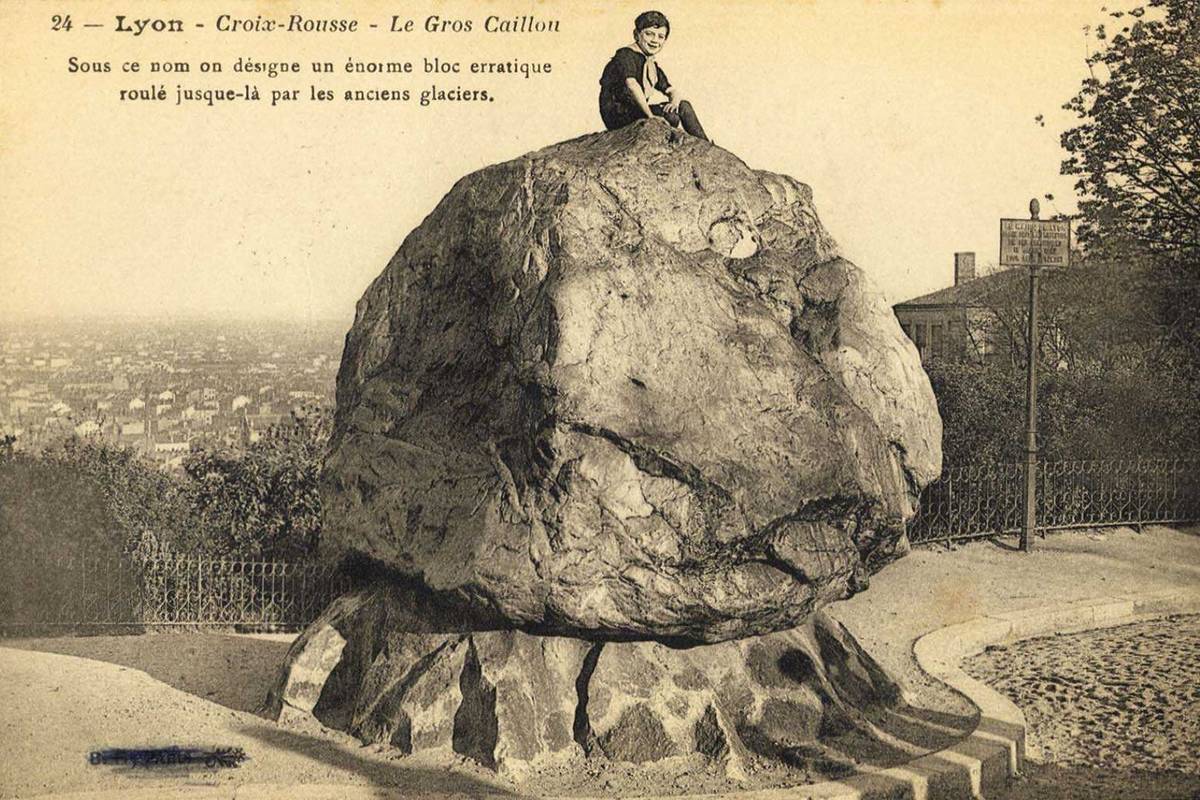
140,000 years ago, Lyon was a giant freezer, as the Croix-Rousse and Fourvière heights were still covered with moraine (rock debris transported by ice) from Alpine glaciers. As far as we know, the boulder traveled over 200 km and came from the Tarentaise valley, famous today for some of the world’s best ski resorts.
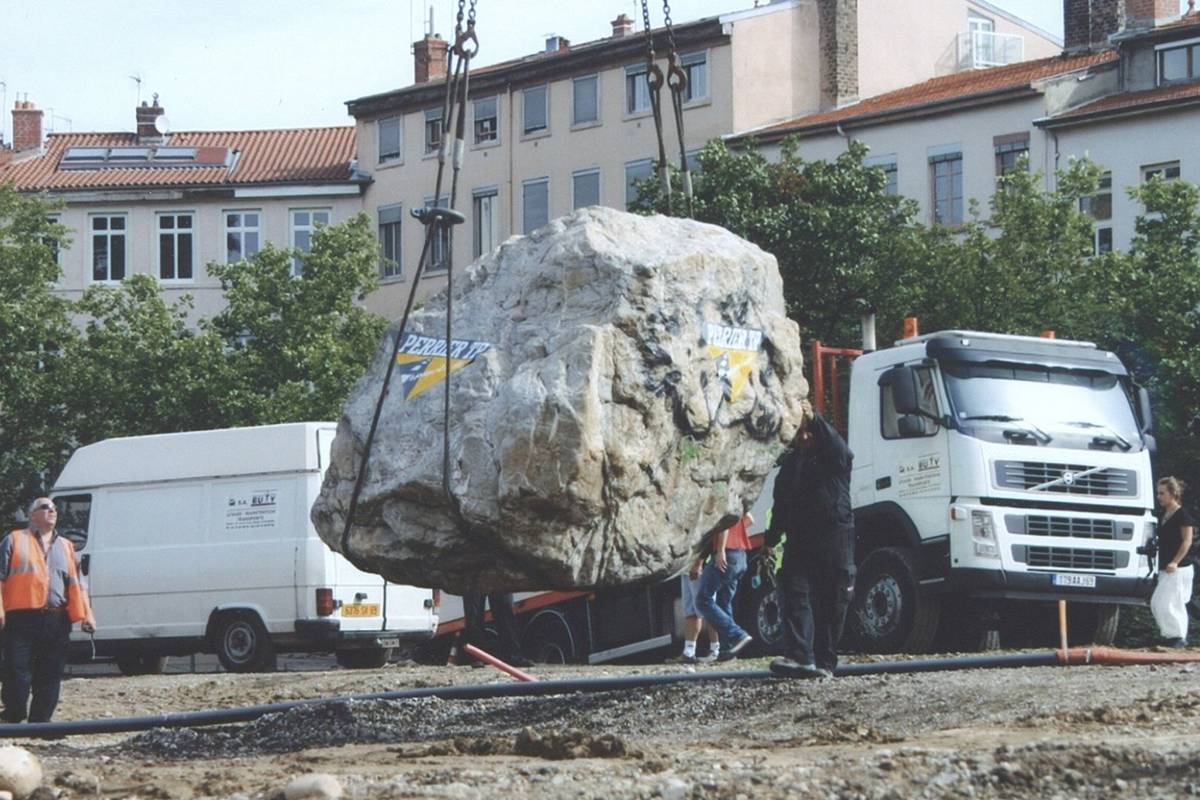
Despite its many years “underground”, the Gros Caillou only came into the spotlight in 1861. During construction of the funicular railway, the workers came face to face with a rock of inconceivable density. This 24-ton rock (the equivalent of three African elephants, after all) had to be extracted, not without difficulty, to allow work to continue. Exhibited from 1891 on the Boulevard de la Croix-Rousse, it was showcased in 2008 with the creation of the Espace Gros Caillou. 1861-2025: 164 years of fame may seem a long time, but on a granite scale, the “Gros Caillou” was still in its infancy!
The Lyonnais and their caillou
But how does it last so long? Give us its rejuvenating cure! It would seem that it’s thanks to its popularity that the rock can survive the ages without the need for an anti-wrinkle serum. Indeed, the “Big Rock” is visited by thousands of people every year. Visitors also come to admire the view of the Alps, where, for him, it all seems to have begun so many years ago…
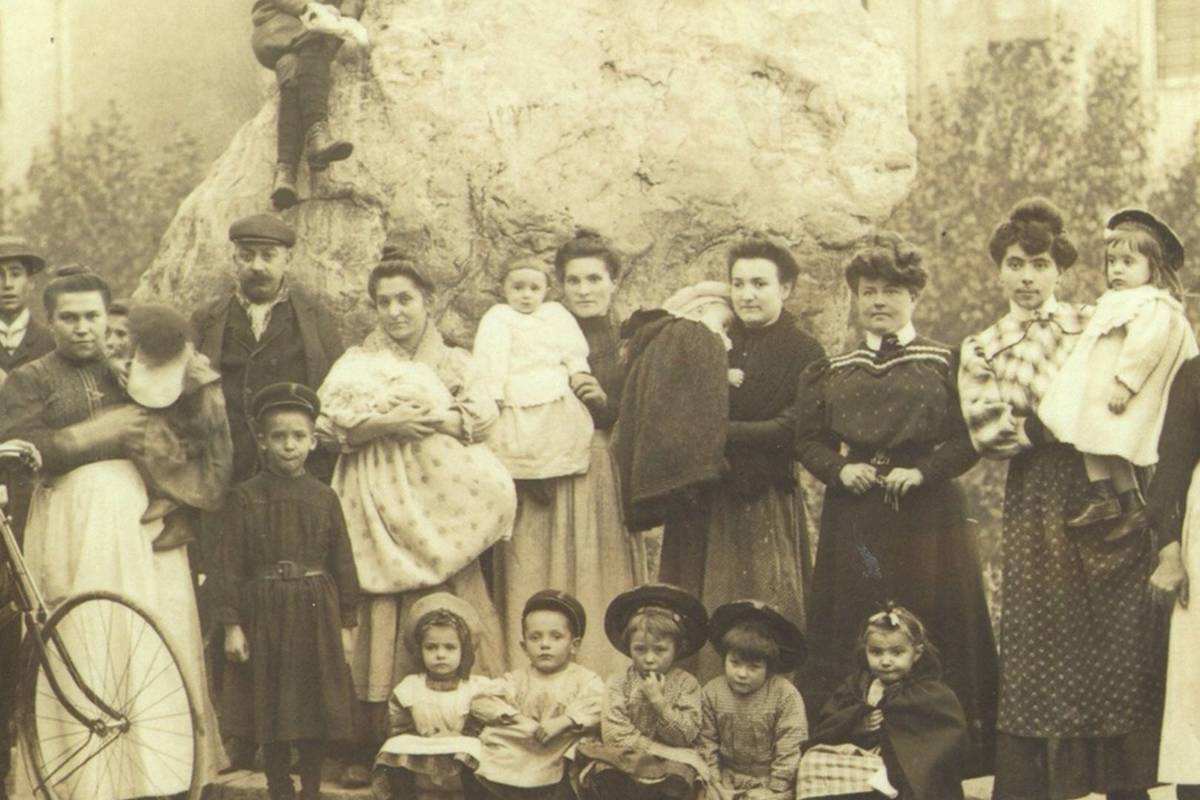
We can see the grumblers coming: “Aren’t we overdoing it for a piece of rock?” In the meantime, our ancestors proudly posed in front of it, as if to demonstrate a certain form of belonging. This stone belongs to us, the Lyonnais! Millions (can we go as far as a billion?) pairs of eyes have passed over it. Some have climbed it, others have brushed against it, still others have simply contemplated it, as if we wanted this stone to express itself and tell us something. After all, why would we deny stone the ability to signify?
Corks, machons and traboules, but also the invention of cinema and the weaving loom, all these things make Lyon a city with a unique DNA, of which the Gros Caillou is an integral part.