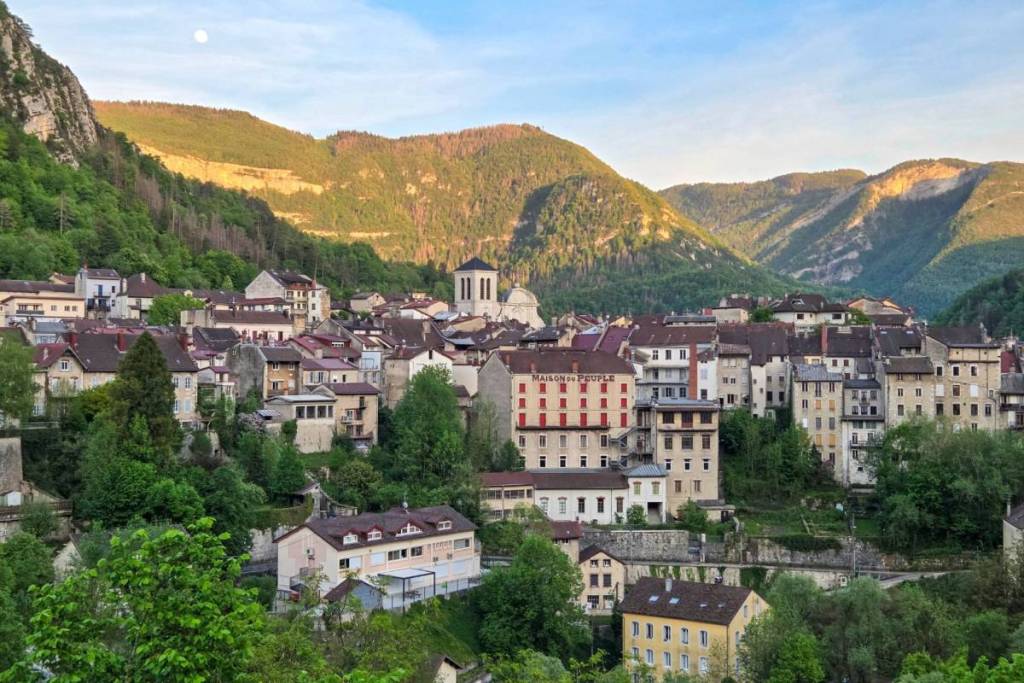

The Jura is one of the most beautiful treasures there is. Villages like Baume-les-Messieurs or Château-Chalon, lakes like Vouglans or Chalain, waterfalls like Les Tufs or Le Hérisson— all are just a stone’s throw away from Lyon. Speaking of a quick trip, here’s one that’s caught our attention—an getaway that once again blends heritage, history, and nature. Let’s head to Saint-Claude, for heaven’s sake!
Saint-Claude, the capital of pipes and diamonds
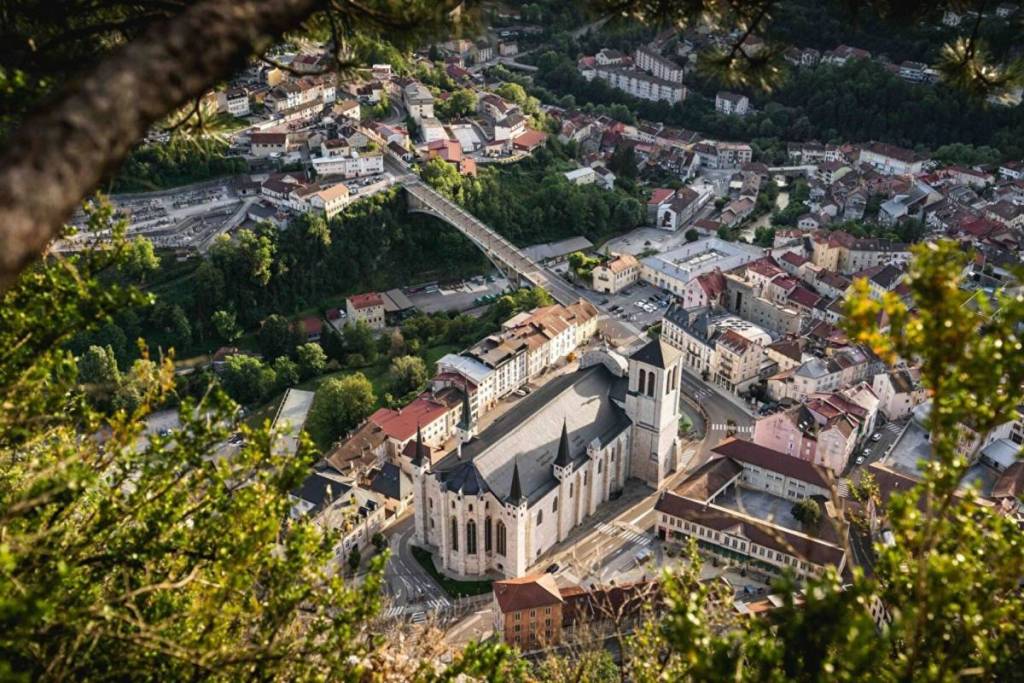
Just as Thiers is known for its knives (and Lyon for its cuisine), Saint-Claude is famous worldwide for its pipes and diamonds. As for the latter, the city has become the “diamond capital” thanks to a combination of three factors: one socio-economic, another geological, and the last geographical.
First, since winters are very harsh in the Jura, farmers couldn’t work the land year-round. So they began carving wood, eventually becoming true master craftsmen. The region is known for its beauty and the abundance of water that flows through it. Saint-Claude is particularly well-endowed in this regard, with a multitude of nearby rivers. To carve wood and later stone, millstones had to be turned,and the water of the Jura provided an inexhaustible and free source of energy. Add to that its proximity to Switzerland— which has long been known for its watchmaking—and you have a small Jura town at the cutting edge of technology. At the beginning of the 20th century, there were no fewer than 4,000 diamond cutters. It was in Saint-Claude that the stones were cut to eventually adorn the fingers or necks of the era’s most prominent figures.
As befits the diamond capital, the setting had to live up to its precious stone. When it comes to nature, you’ll be served on a silver platter. Saint-Claude is located within the Haut-Jura Regional Nature Park. Lakes, forests, caves, waterfalls, plateaus, mountains, rivers… All in abundance. Along with the Morvan, it’s one of the most beautiful paradises for all lovers of nature. Saint-Claude holds three distinctions: “Plus Beaux Détours de France,” “Ville et Métiers d’Art,” and “Sites et Cités Remarquables.”
Louis XI, Anne of Brittany, and… the Reines-Claudes
The discovery in 1160 of the intact body of Saint Claude, a 7th-century monk, brought the town fame throughout the Western world. Very quickly, Saint-Claude became an essential pilgrimage site on par with Vézelay or Le Puy-en-Velay. King Louis XI visited several times, most recently in 1482, accompanied by 6,000 men! This visit brought the town unprecedented fame.
A few years later, in 1499, it wasAnne of Brittany’s turn to visit, hoping that divine providence would help her conceive a child. Her wish was granted! A few months later, she gave birth to a daughter whom she naturally named Claude. The princess would become queen upon marrying a certain Francis I… and would be nicknamed “the Good Queen.” She is also the only princess to have been simultaneously the daughter, wife, and mother of kings of France. Finally, it was in her honor that the famous green plums were named “Reines-Claudes.” Another gem—an emerald this time, but edible and more affordable!