
It’s always fun to explore the city of Lyon on a map from your phone, to zoom in and out while trying to get your bearings, to guess the distance between one point and another, and to play games like “which is the biggest,” “which is the farthest,” or “which is the highest”… In any case, we usually come to the same conclusion: the Tête d’Or Park always takes up a significant portion of our screen and always seems larger than we could have imagined. But our ancestors didn’t need Google Maps to know that a very large park was essential to the well-being and satisfaction of the city’s residents.
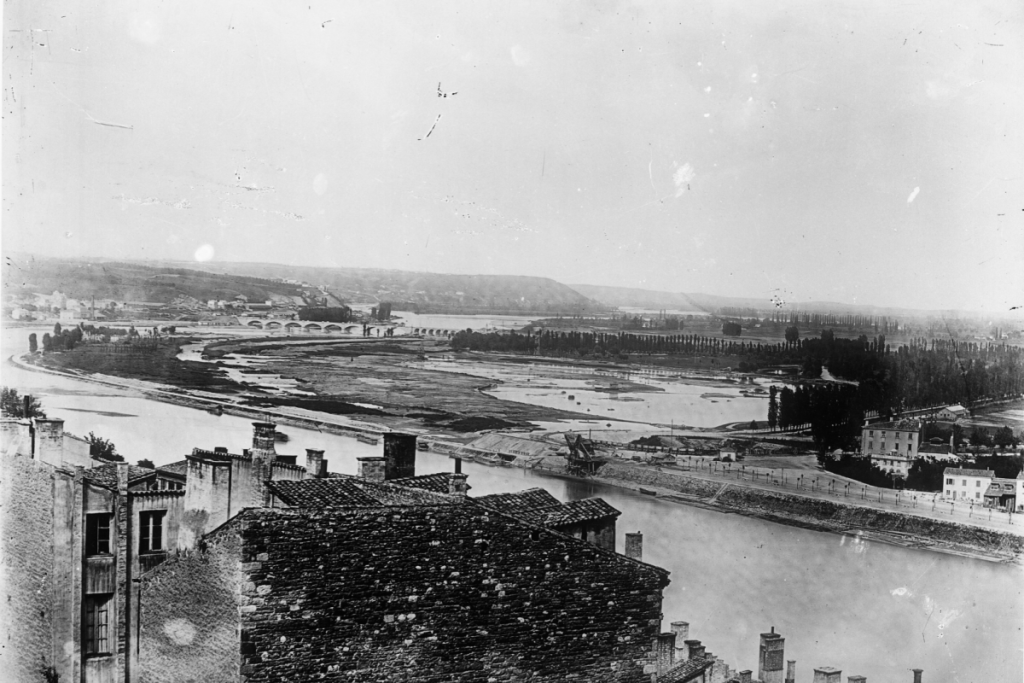
169 years ago, the Brotteaux neighborhood was unrecognizable…
By the way, do you know what the word “Brotteaux” means? In traditional Lyon dialect, it referred to the oxbow lakes of the Rhône, a floodplain that could be likened to a marsh. In fact, the river’s alluvial plain occupies a large part of what are now the 3rd, 6th, and 7th arrondissements. In fact, when you look at urban development in the 19th century, Lyon was a water-filled (not to say swampy) city. Perrache and Confluence were veritable wading pools back then!
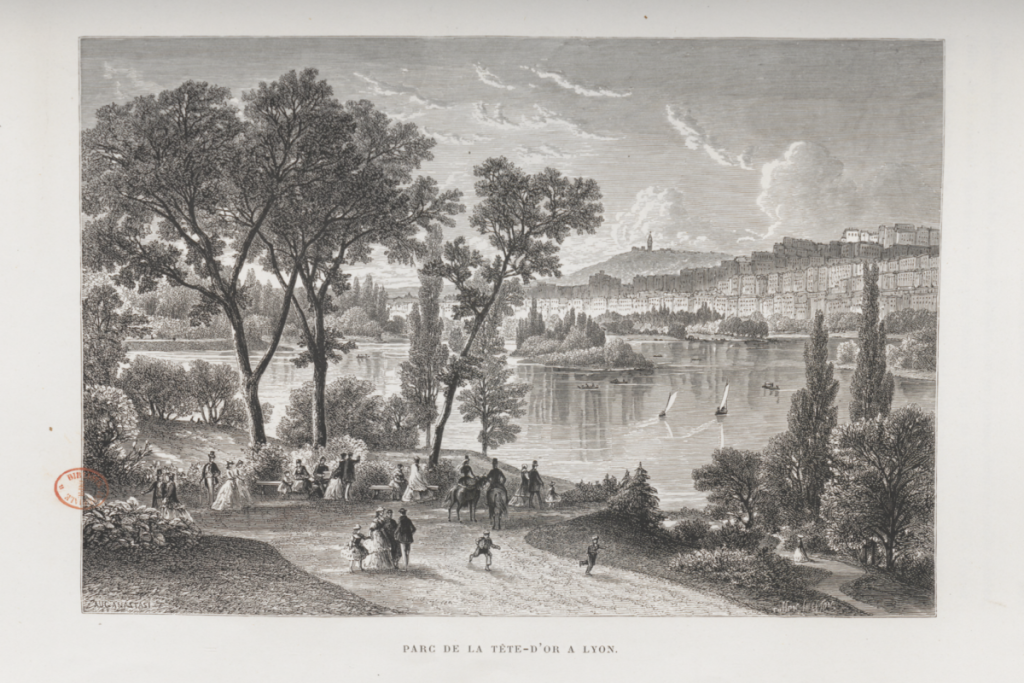
As early as 1812, plans to create a park in Lyon were under consideration, but where should it be located? Several sites were considered, including Fourvière Hill, as well as the Brotteaux area, which at the time belonged to the Hospices Civils de Lyon. One thing led to another, and the urban project gained momentum to, in the words of the mayor and prefect at the time, Claude-Marius Vaïsse, “give nature to those who have none.” In 1856, construction began and would last five years, notably including the building of a dike to separate the site from the Rhône River and keep the area above water. The earthwork for the lake would prove to be the most grueling stage. Dug entirely by hand, it required years of labor, mostly carried out by former silk weavers who had lost nearly everything since the last revolts…
From the moment it opened in 1857, the park was home to the Jardin des Plantes de Lyon. It’s important to note that at the time, under a decree from 1794, every city with more than 300,000 inhabitants was required to establish a central school, teach the sciences, and maintain a natural history museum as well as a botanical garden. Established in 1804 on the slopes of the Croix-Rousse, the botanical garden moved to the park upon its opening, 53 years later.
A 117-hectare green lung of prodigious proportions
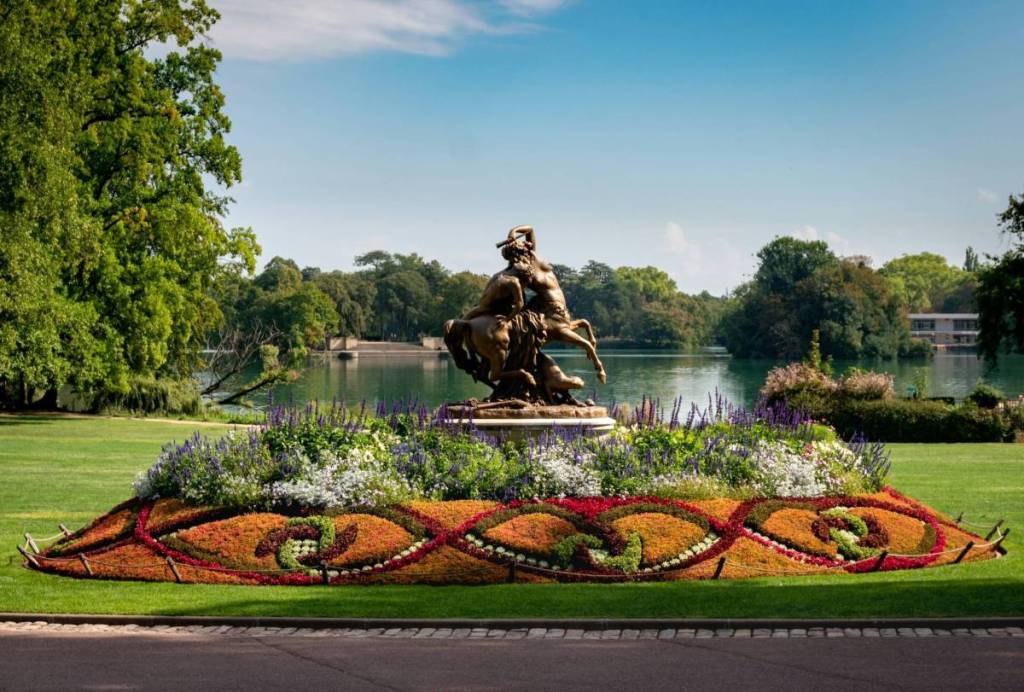
The Tête d’Or Park is a 117-hectare green oasis. To give you an idea, it’s twice the size of Disneyland Paris, or three times the size of the Vatican! Given its size and history, the park is simply extraordinary.
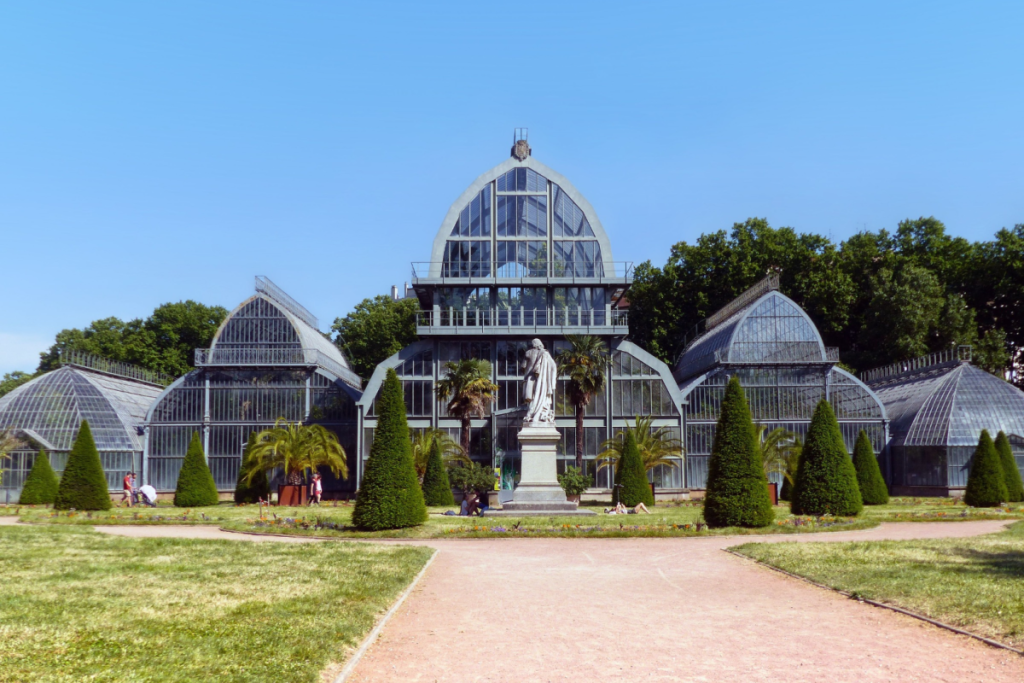
Nearly 9,000 trees are planted there, including plane trees reaching over 40 meters. The lake alone covers 16 hectares. And what about its 30,000 rose bushes, its greenhouses (the tallest in France!), its botanical garden, and its 15,000 plants? The botanical garden is, in fact, considered one of the most beautiful in Europe and stands out as France’s premier municipal garden. Experts from around the world visit to admire rare species found nowhere else.
Finally, it’s impossible to talk about the Tête d’Or without mentioning the iconic Porte des Enfants du Rhône. Here, too, the dimensions are dizzying: at 32 meters long, 11 meters high, and weighing 62 metric tons, it’s the size of a Boeing 737! Since 1982, this majestic gate has been listed as a historic monument.