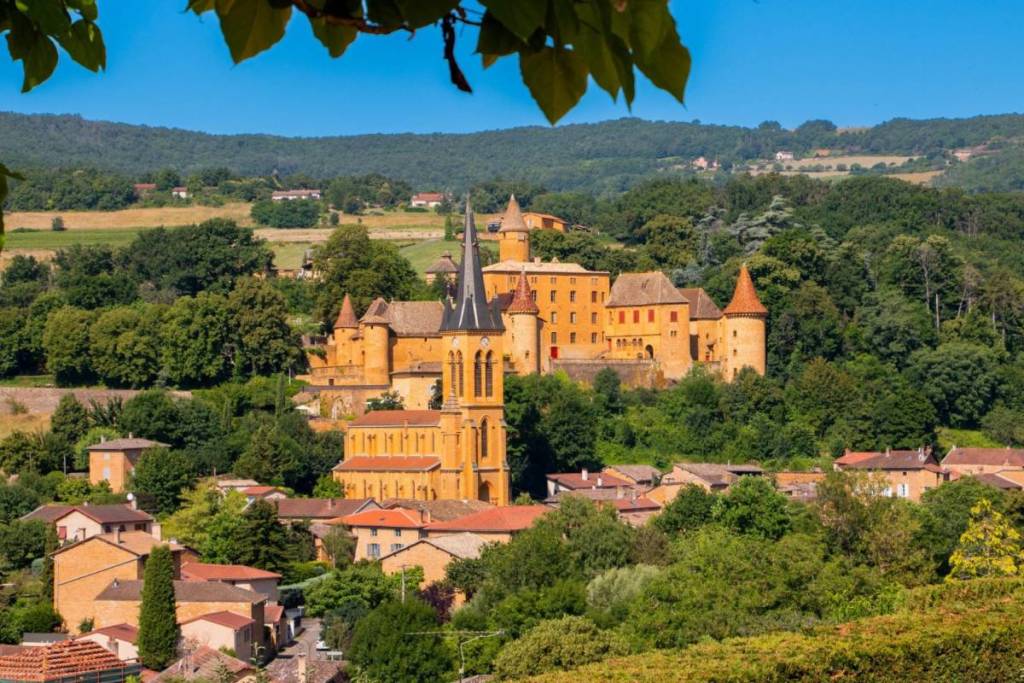

June is in full swing, bringing with it its share of festivities. Between sunsets from the riverbanks and those strangely lingering moments on the terrace, it’s also time to think about getting away. We invite you to continue discovering the treasures of Beaujolais as we head this time to Jarnioux, a village that, just by the way its name sounds, takes us back in time!
Jarnioux, the pearl of the Pierres Dorées region
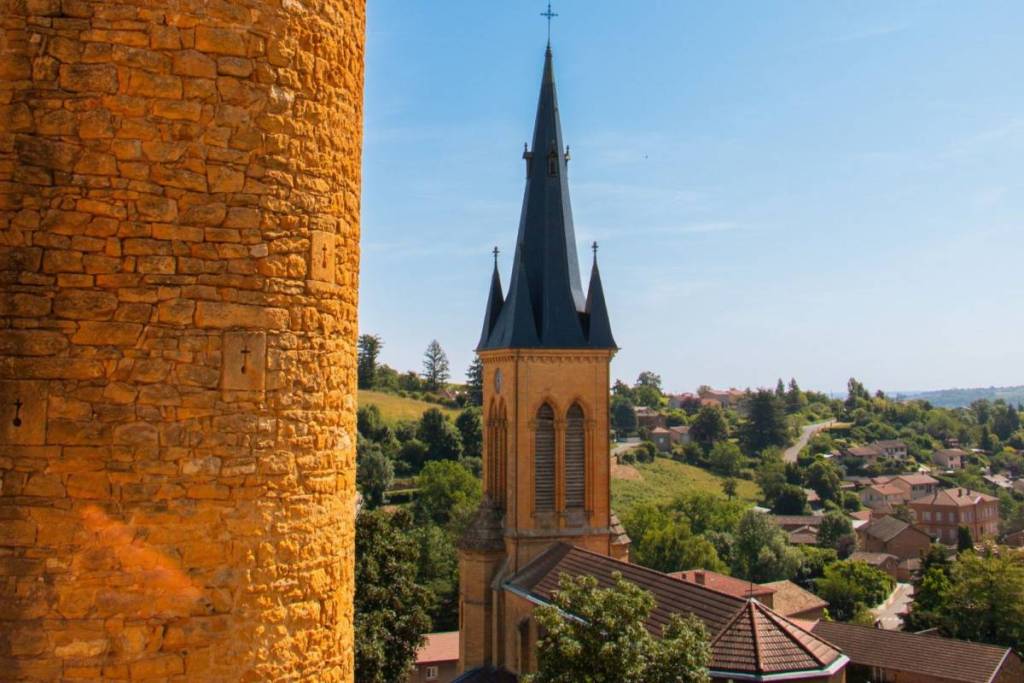
Aaaaah, the Pays des Pierres Dorées… Honestly, we dare you to find a more enchanting name. Our imagination runs wild at the mere mention of it… Within an area the size of two Lyon districts, you’ll find the Azergues Valley and its hiking trails, Oingt—one of the most beautiful villages in France—as well as Jarnioux and its castle…anything but ordinary. Add to that just the right amount of hills and plenty of vineyards, and you get what UNESCO has designated as a Global Geopark: the Beaujolais.
Jarnioux has actually been part of the municipality of Porte des Pierres Dorées since 2019, following the merger of Pouilly-le-Monial and Liergues. We learn that the area was already inhabited by our ancestors, the Gauls, and one of their chieftains, Gernioz, from whom Jarnioux takes its name! What an evocative name, isn’t it? Like Balazuc or Polignac, these words transport us to the Middle Ages, to the era of the Visiteurs and Godefroy de Montmirail! And speaking of knights and chain mail, let’s take a look at the famous Château de Jarnioux…
The Château de Jarnioux and its 7 towers…
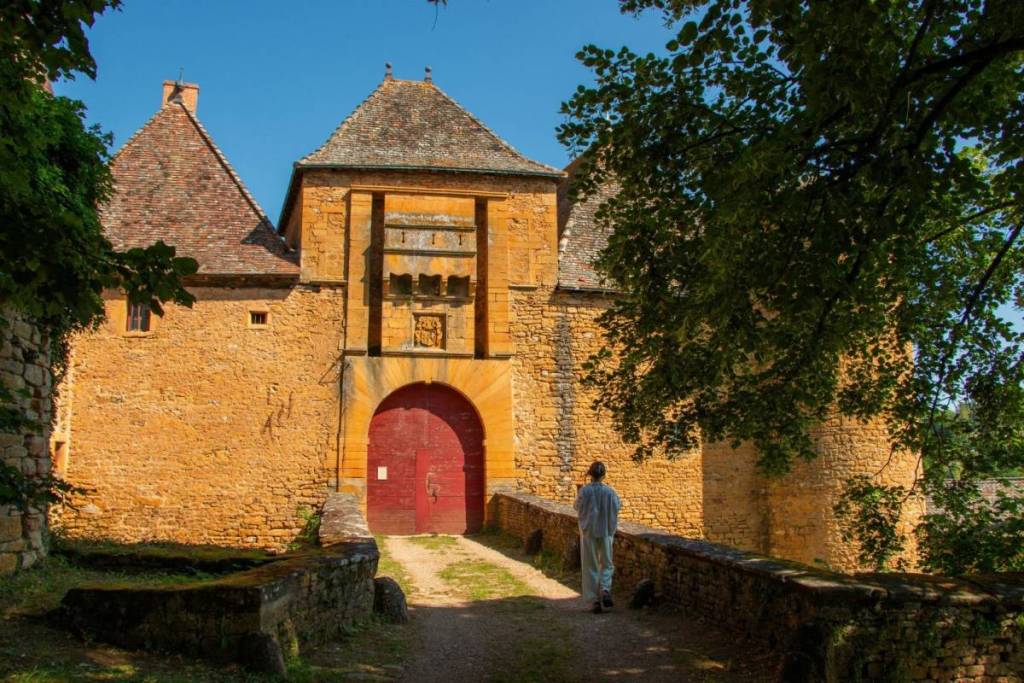
Not four towers but seven—the castle has a touch of grandeur! It was founded in the 13th century and underwent renovations in the 15th and 17th centuries, which is where it gets its unique structure. Indeed, just like the cloisters of Tournus or Salles-Arbuissonnas, these thousand-year-old buildings have gathered marks and traces over the centuries…
The castle was built of golden stone, giving it a certain air of Tuscany or Andalusia. It consists of several buildings from different eras, including the towers and the famous keep, which rises 30 meters high. We learn that in the past, entry was via a drawbridge , now replaced by a conventional bridge. The entire complex is listed as a historic monument.