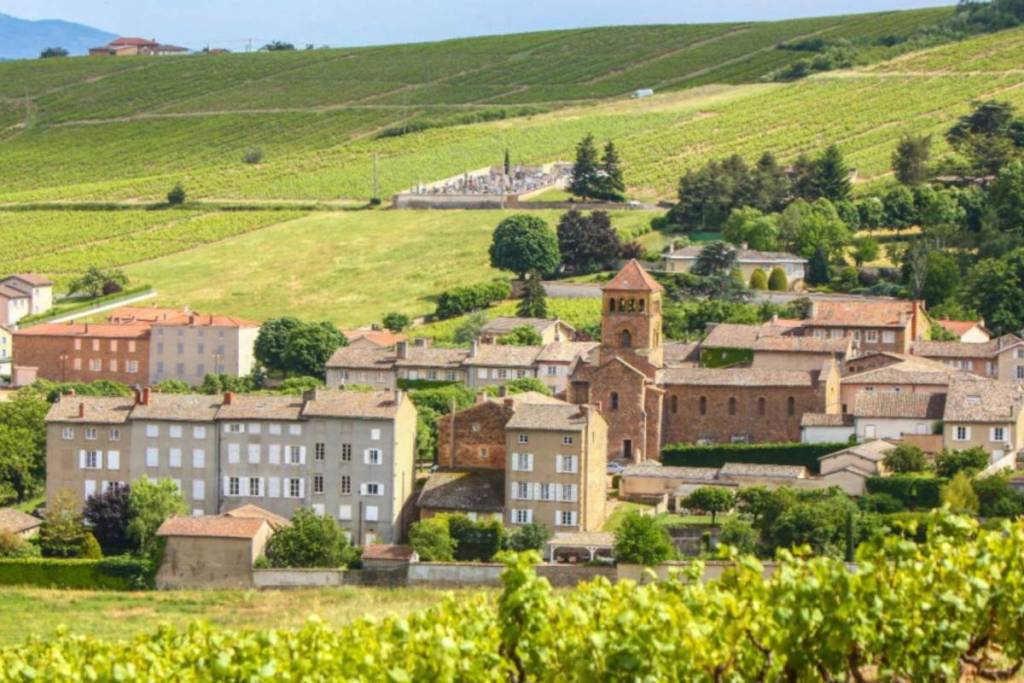

Truly, the Beaujolais region and its 160,000 hectares are a veritable Aladdin’s cave. After strolling along the Azergues River, climbing to the heights of the Rhône, or taking in the panorama from Chiroubles, it’s time to discovera unique place steeped in history. For while the Beaujolais has received UNESCO’s full endorsement, it is obviously due to its natural treasures and vineyards stretching as far as the eye can see, but also thanks to its architectural and historical heritage. The village of Salles-Arbuissonnas-en-Beaujolais is its crowning jewel.
Salles-Arbuissonnas-en-Beaujolais, the thousand-year-old gem of our local heritage
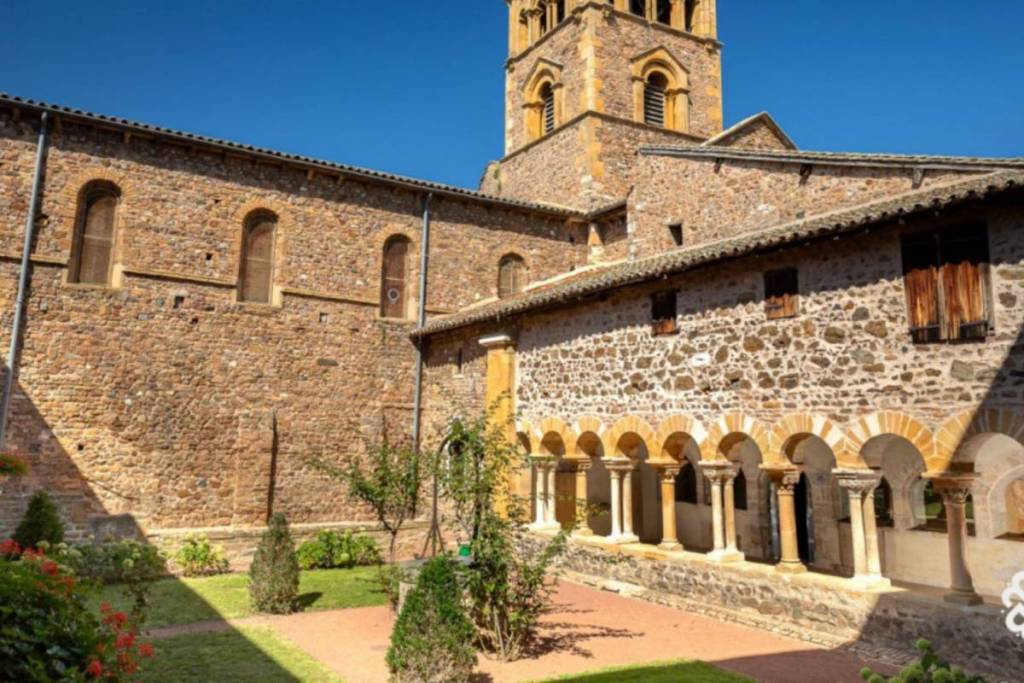
Here is a place with as many reasons to come and discover it as there are letters in its name! For in addition to the magnificent church, the priory offers you a glimpse of the cloister, the parlor, the chapter house, and its murals. In fact, we learn that it is the last Romanesque cloister in the region and, fortunately, one of the best-preserved in France alongside the Royal Monastery of Brou or the Abbey of Fontenay. One cannot help but appreciate these structures, including the church, built of golden stone, which naturally evokes the ochre color of the Beaujolais and its villages such as Ternand or Oingt.
It all began when the monks of Cluny settled in Salles in 960 to found a church and its cloister. The Benedictines divided their time between working the land, studying the Scriptures, and building the complex. It wasn’t until the year 1100, however, that the church and cloister were completed. Over the centuries, the site underwent several changes, including the arrival of nuns in the 14th century, who left a strong mark, and a notable period of growth between the 15th and 18th centuries.
A village “built of stone”
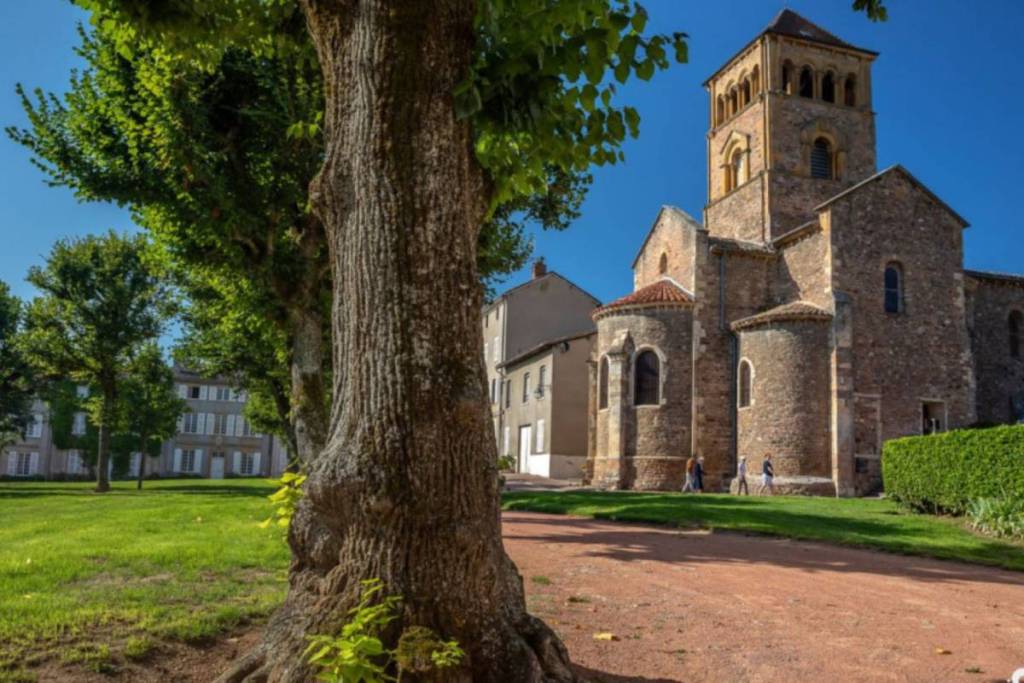
Exactly 50 years ago (in 1976), the village of Salles merged with that of Arbuissonnas to become the town we know today. To get to Arbuissonnas from Salles, you can take the hiking trails or drive there (2 kilometers).
In addition to the remarkable architecture of the two villages, don’t miss the many scenic viewpoints, including the one in the hamlet of Arbuissonnas or the one at the Polage cross for a panoramic view of the surrounding vineyards. Salles derives its name from the Celtic language and literally means “place where one stops”—which says it all…